By Jerry Vaiana | LeafWorldMedia | Updated May 2026 | 14 min read
The shift from Google to social search is not a trend — it is a fundamental restructuring of how people discover information, products, and services online.
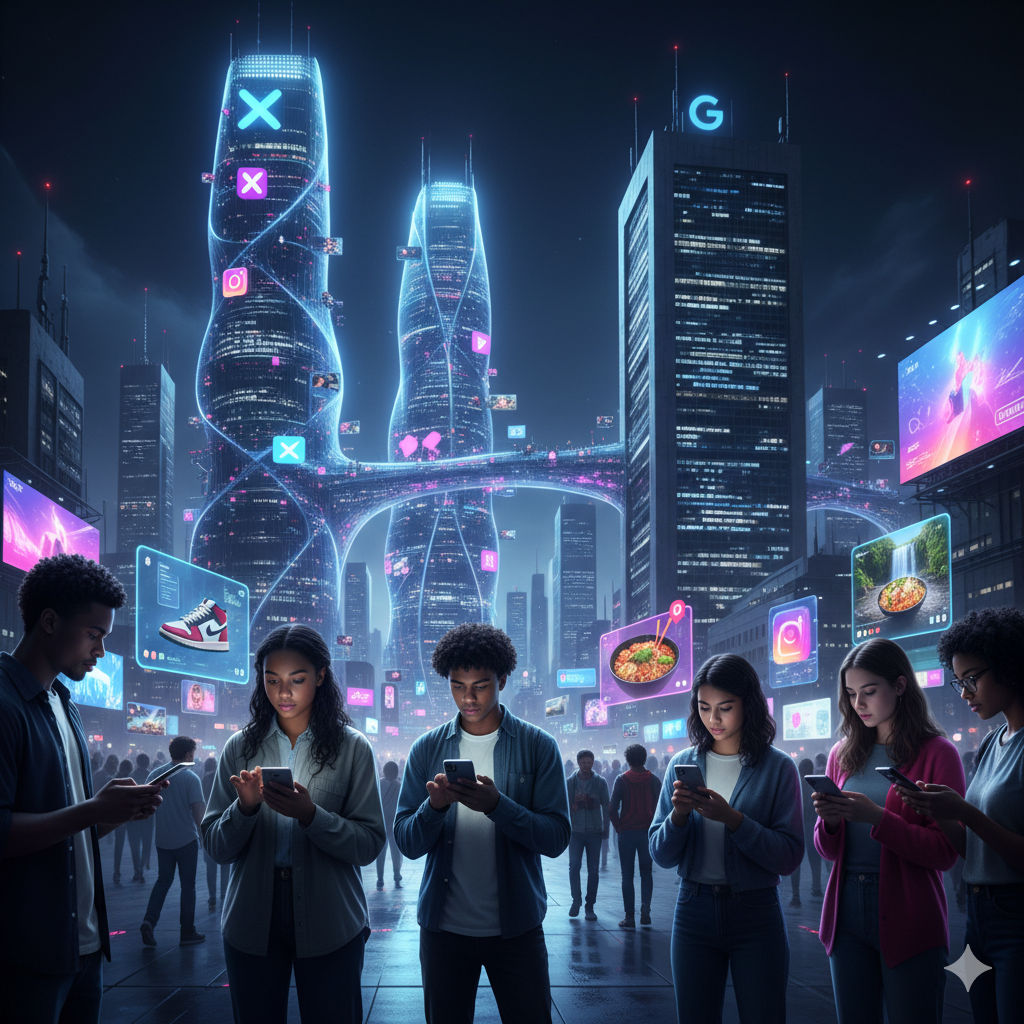
Social media platforms have surpassed Google as the primary search destination for most Americans. Two-thirds of U.S. consumers now use social platforms as search engines — and for brands that haven’t adapted, this shift represents an existential threat to their digital visibility. This guide breaks down exactly what’s happening, which platforms are winning, and what your business needs to do right now.
New to This? Start Here
Social search means people are typing their questions into TikTok, Instagram, and YouTube instead of Google. Think of it this way — instead of Googling “best coffee shop near me,” someone opens TikTok and searches the same thing to see real videos from real customers. This is now how most people discover businesses, products, and services. If your brand isn’t showing up there, you’re invisible to the majority of buyers.
66%Of Americans now use social media platforms as their primary search engines
38%Of all social searches happen on TikTok — 2+ billion daily searches
3xHigher engagement rates for businesses optimized for social search
40%Shorter customer journeys from discovery to purchase via social search
The Game Has Changed: Social Media Has Overtaken Google
Do you remember when “Google it” was the answer to every question? That reflex is fading fast. The current generation of digital users no longer automatically turns to a search engine for advice or information. Instead, they turn to social platforms where they can find answers from trusted creators and peers through engaging videos, genuine stories, and immediate community feedback.
This shift gained momentum between 2023 and 2026 as platforms dramatically improved their search capabilities. While Google was optimized for text and websites, social platforms prioritize visual content, personal experiences, and community validation — elements that strongly resonate with modern consumers looking for authentic guidance.
The Numbers Are Decisive:
About two-thirds of U.S. consumers now use social media sites as search engines — a significant jump from just 40% in 2023. One quarter of Americans now say social media is their primary search tool, not just an occasional substitute for Google. 78% of people think social search results are more useful for discovery-based searches, and 64% feel they get more genuine information from creator-driven content than from traditional websites.
Platform Search Market Share
| Platform |
Social Search Share |
Daily Searches |
Strongest Categories |
| TikTok |
38% |
2+ billion |
Trends, products, how-to, entertainment |
| Instagram |
29% |
1.6 billion |
Fashion, food, travel, lifestyle products |
| YouTube |
22% |
1.2 billion |
Tutorials, reviews, long-form education |
| Pinterest |
8% |
440 million |
Home decor, weddings, DIY planning |
| Others |
3% |
165 million |
Professional, niche communities |
TikTok’s dominance is driven by its highly efficient algorithm and video-centric approach, which delivers instant visual responses to search queries. Its search volume has grown 340% since 2023 — making it the fastest-growing search platform globally. YouTube leads in session length — users spend 3.4x more time with YouTube search results than other platforms, making it the strongest channel for detailed, instructional content.
Why Social Search Beats Google for Discovery
Social platforms win on four dimensions that traditional search cannot replicate — visual demonstration, creator trust, speed, and community validation.
Factor 1
Visual Demonstration
Seeing a product in action, in a real-life setting, demonstrated by a real person gives context that static images and text cannot match. 85% of consumers feel more confident in purchases found through video content than through text-based search results.
Factor 2
Creator Trust
72% of users trust recommendations from creators they follow more than Google’s top results. A creator demonstrating a product on TikTok often has more influence than a brand’s website — regardless of how sophisticated the SEO is.
Factor 3
Speed and Immediacy
Social platforms deliver quick, digestible answers without requiring users to click through to other websites. The average response time on social platforms is 68% faster than conventional search engines for discovery queries.
Factor 4
Community Validation
Likes, comments, and shares provide immediate social proof. 78% of users say they read comments before deciding to buy products found through social search. The comments section has become the new review section.
The 4 Fundamental Differences: Social Search vs. Google
Difference 1
Video-First Discovery
Google prioritizes text with visuals as secondary. Social platforms prioritize video and images entirely — changing how users consume information. 78% of DIY and tutorial searches have moved to YouTube and TikTok because visual demonstration is fundamentally more effective than text instructions.
Difference 2
Creator-Driven Results
Social search prioritizes content from individual creators over brands and websites. Authority is established through engagement metrics and perceived expertise rather than traditional SEO signals. Brands collaborating with creators have 3.5x more visibility.
Difference 3
Engagement-Based Ranking
Social platforms heavily weight engagement metrics — watch time, shares, comments, saves. 64% of social search results are less than a month old compared to traditional search where old content can rank for years. Brands must produce regularly engaging content.
Difference 4
Personalized Results
Social search results are heavily personalized based on accounts followed and past engagement. There is no single “top result” for any query. Brands must build presence across multiple niche audiences rather than chasing one broad ranking.
The 7 Categories Where Social Search Has Won
In seven key discovery categories, social media has not just competed with Google — it has replaced it as the primary search destination for most consumers.
| Category |
Social Search Share |
Dominant Platform |
Key Insight |
| Fashion and Style |
82% |
TikTok, Instagram |
Brands responding to trending style searches get 5.7x more engagement |
| Restaurant Discovery |
74% |
Instagram, TikTok |
Social-optimized local eateries see 43% more new customers |
| Travel Planning |
68% (under 35) |
TikTok, Instagram |
Destination searches on TikTok up 430% since 2023 |
| Beauty Products |
85% |
TikTok, YouTube |
Creator-focused brands see 3.8x higher conversion rates |
| Home Decor |
76% |
Pinterest, Instagram |
52% higher average order values for social-first brands |
| DIY and Tutorials |
79% |
YouTube, TikTok |
Short-form DIY content captured 40% of searches since 2023 |
| Entertainment |
72% |
TikTok |
3.6x higher conversion for brands engaging social search communities |
Where Google Still Wins
Even with the rise of social media search, Google maintains dominance in several important categories — primarily those requiring authoritative, detailed, or complex information.
| Category |
Google Search Dominance |
| Medical / Health Information |
88% |
| Financial / Legal Research |
92% |
| Academic / Scientific Content |
94% |
| Technical Documentation |
86% |
| Government Services |
95% |
The key insight: Google is increasingly the platform for complex research, while social media is the platform for discovery and purchase intent. Both require a presence — but the content strategy for each is fundamentally different.
What This Means for Your Business — And How OmniCast Solves It
The brands winning in this new landscape are not the ones posting more frequently on social channels. They are the ones whose content appears consistently across every platform where their customers are searching — in the right format, at the right moment, with the right message. That is extraordinarily difficult to do manually.
Consider what full social search optimization actually requires: TikTok videos optimized for its search algorithm. Instagram posts with strategic hashtag and location tagging. YouTube tutorials structured for search discoverability. Pinterest boards for planning-oriented queries. And simultaneously, Google-optimized content for complex research queries. Most businesses can execute one or two of these. Almost none can execute all of them simultaneously and consistently.
This is exactly what OmniCast was built to solve. OmniCast takes a single topic brief and transforms it into 8 professional content formats — video, audio, news articles, blog posts, infographics, flipbooks, and social posts — simultaneously distributed across 300+ platforms within 24–48 hours. One brief. Every platform. Everywhere your customers are searching. The consumer journey now touches 2–3 platforms before a purchase decision. OmniCast ensures your brand appears at every step.
See the full LeafWorldMedia services breakdown or check the bundle packages for done-for-you monthly authority building starting at $3,499/mo.
Frequently Asked Questions
Has social media search really surpassed Google? +
Yes — for discovery and recommendation-based searches, social media platforms have surpassed Google as the primary destination for most Americans. 66% of U.S. consumers now use social platforms as search engines, up from 40% in 2023. Google maintains dominance for complex, authoritative information searches in medical, financial, and legal categories. But for product discovery, local recommendations, style inspiration, travel planning, and entertainment, social search is now the first stop for the majority of consumers.
Which social media platform has the most searches? +
TikTok currently leads with approximately 38% of all social searches — processing over 2 billion searches daily, a 340% increase since 2023. Instagram is second at 29%, particularly strong in fashion, travel, and food discovery. YouTube accounts for 22% of social search volume but leads in session depth, with users spending 3.4x more time with YouTube search results. Pinterest holds 8% in planning-oriented categories like home decor and weddings.
Why do people prefer social media search over Google for product discovery? +
Four factors drive the preference: visual demonstration (seeing products in real-world use), creator trust (72% of users trust creator recommendations more than Google’s top results), speed (social platforms deliver answers 68% faster for discovery queries), and community validation (likes, comments, and shares provide immediate social proof that text-based search results cannot replicate).
How does social search affect the consumer purchase journey? +
Social search has compressed the consumer journey significantly — 65% of Gen Z and Millennial consumers have purchased products within 24 hours of finding them through social search. The modern journey touches 2 to 3 platforms: discovery on TikTok or Instagram, deeper research on YouTube, and price comparison on Google. Brands with synchronized presence across all these platforms see 40% shorter customer journeys and conversion rates 4.5x higher than single-channel brands.
What should businesses do to optimize for social search? +
Businesses need to treat every piece of content as a potential search result. This means creating content specifically designed to answer what audiences are searching for on each platform, in the formats each platform rewards. TikTok favors short demonstrations with strong hooks. YouTube rewards thorough content with keyword-rich descriptions. Instagram depends on hashtags and location tags. The most effective approach is synchronized, multi-platform content distribution — which is exactly what
OmniCast delivers.
Can small businesses compete in social search without a large budget? +
Yes — social search levels the playing field compared to traditional SEO. Social search algorithms prioritize engagement over production value. Authentic, demonstration-based content answering specific niche questions consistently outperforms expensive brand content. Small businesses should focus on answering specific questions in their category with genuine content — this approach outperforms traditional social media marketing by 4 to 5x for businesses with limited budgets.
How does OmniCast help businesses with social search optimization? +
OmniCast by LeafWorldMedia transforms a single topic brief into 8 professional content formats simultaneously distributed across 300+ high-authority platforms within 24 to 48 hours. This gives businesses synchronized presence across every platform where their customers are searching, in the format each platform rewards, without requiring a dedicated team for each channel. Every OmniCast campaign builds permanent authority assets that compound over time. See the
bundle packages for monthly plans starting at $3,499/mo.

Jerry Vaiana
Founder & CEO — LeafWorldMedia LLC
With over 30 years of business leadership, Jerry designed OmniCast to give businesses of every size the synchronized multi-platform presence that the social search era demands — without the 50-person marketing department it used to require. Based in Staten Island, NY.
Be Everywhere Your Customers Are Searching
The social search era demands synchronized presence across every platform simultaneously. OmniCast puts your brand on TikTok, YouTube, Instagram, Google, and 300+ more — from one brief, in 24–48 hours.


Leave a Reply