While businesses have been optimizing titles and building backlinks, Google has been quietly transforming into something that barely resembles the search engine we built our strategies around. More than 50% of Google searches now end without a single click to any website. Traditional SEO is not dead — but relying on it alone is a strategy that is failing. This guide explains what is happening and what smart businesses are doing instead.
The Core Shift
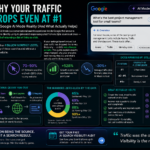
Google has transformed from a search engine that directs users to other sites into a platform that keeps users within its own environment. Featured snippets, AI Overviews, knowledge panels, and People Also Ask boxes now answer queries directly — without sending traffic anywhere. Organic click-through rates have fallen 30–50% across most sectors. Even the #1 ranked position now captures less than 20% of clicks — down from 30% a decade ago. The businesses winning in 2026 are not abandoning SEO. However, they are embedding it within a multi-channel authority strategy that generates traffic, leads, and sales regardless of what Google does next.
Google’s search results pages have transformed dramatically — organic listings now compete with ads, featured snippets, AI Overviews, shopping carousels, and knowledge panels that answer queries without requiring a click.
Google’s Changing Environment
Do you remember when Google was simply ten blue links on a page? Those times have passed. Today’s search results are complex environments where organic listings compete with an ever-growing range of SERP features. Featured snippets, knowledge panels, People Also Ask boxes, AI Overviews, and image carousels now dominate the space that organic listings once owned.
This change is not accidental. It is a calculated strategic move. Google is deliberately shifting from a search engine that directs users to other sites into a platform that keeps users within its own environment. The more queries Google can answer directly in search results, the less users need to click through to your website.
Consequently, the SEO strategies that worked five years ago — or even a year ago — are quickly becoming less effective. Google now prioritizes keeping users on its platform rather than directing them to yours. Furthermore, this trend is accelerating as AI-powered search becomes more capable of synthesizing and delivering answers directly.
The Real Problem: Zero-Click Searches Are Killing Organic Traffic
The numbers paint a stark picture. More than 50% of Google searches now end without a click to any website. Consider that for a moment. More than half of all searches no longer generate traffic to any site. This trend — commonly called zero-click search — represents a fundamental change in how users engage with search results.
This is not a problem limited to small businesses or specific industries. Large publishers and well-known brands are experiencing significant traffic drops after recent Google updates. Furthermore, websites that previously depended almost entirely on organic search traffic are seeing visitor numbers fall — even when their rankings have stayed the same or improved.
The Featured Snippet Paradox: Featured snippets were once considered a major SEO victory. However, data increasingly shows that these high-profile positions often lead to fewer clicks, not more. Google pulls the most valuable information from your content and displays it directly in search results — fulfilling the user’s query without them ever visiting your site. Therefore, the better you answer users’ questions, the more likely Google is to display that answer directly — potentially reducing your traffic instead of increasing it.
Why Being Number One Is No Longer Enough
Even ranking in the #1 position no longer delivers what it once did. Each year, the first organic result is pushed further down the page — now appearing below ads, featured snippets, and several SERP features like image carousels and People Also Ask boxes.
A decade ago, the click-through rate for the top organic position was approximately 30%. Today, it is often less than 20%, and some studies show even lower rates in competitive categories. As a result, traditional SEO success metrics like rankings no longer directly correlate to business results. This understanding is driving the shift toward multi-channel authority strategies.
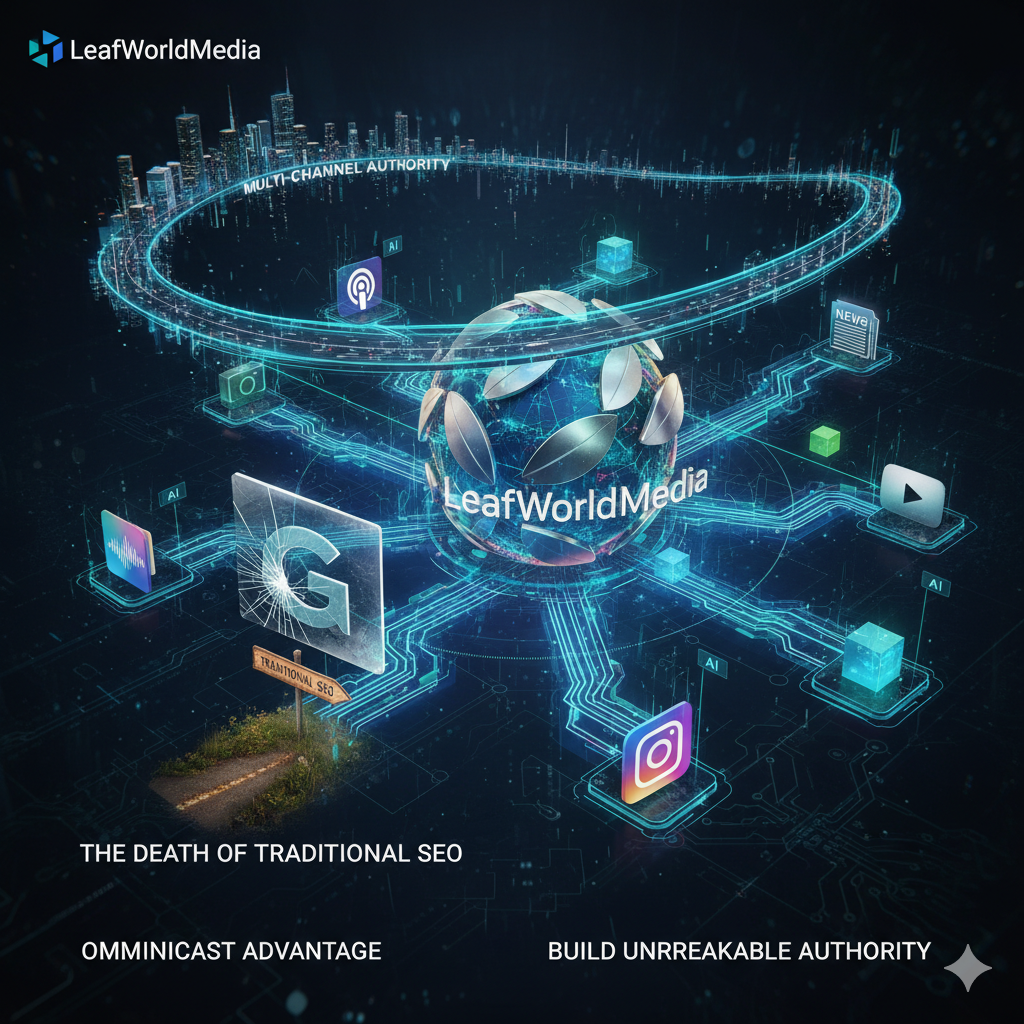
Multi-channel authority is not a replacement for SEO — it is the broader strategy that makes SEO work better while eliminating dangerous single-platform dependency.
The Multi-Channel Authority Strategy
Although Google’s changing landscape creates real challenges, it also opens new opportunities for businesses that are ready to evolve. Multi-channel authority is not merely a response to SEO’s limitations. It is a more comprehensive strategy that establishes numerous touchpoints with your audience across the entire digital landscape.
Instead of prioritizing Google’s organic rankings as the primary visibility channel, a multi-channel authority strategy distributes your brand’s presence across a variety of platforms. This ensures your brand is seen wherever your audience is — not only when they are actively searching. It changes your online presence from single-channel dependency into omnipresence.
Moreover, multi-channel authority actually strengthens your SEO rather than competing with it. When users see your brand on different platforms, they are more likely to click on your search results. This increases click-through rates and indirectly improves your rankings through the positive feedback loop that pure SEO strategies cannot generate on their own.
What Multi-Channel Authority Actually Means
Multi-channel authority means making your brand a recognized expert across many digital platforms simultaneously. Rather than only optimizing for keyword rankings, you build a broad digital presence that includes news websites, video platforms, podcasts, social media, and direct distribution channels.
This approach uses content synchronization — transforming core messages into formats best suited for each platform. One topic brief becomes a news article, video segments, a podcast episode, social posts, and email content — simultaneously distributed across all channels. OmniCast by LeafWorldMedia automates this entire process. Learn how OmniCast works →
The 5 Platforms Smart Businesses Are Using Beyond Google
1. Media and News Site Features
Being featured on reputable media and news sites provides instant credibility that organic search rankings cannot match. These placements position your brand as relevant and worth talking about — creating third-party validation that resonates with audiences and generates high-quality referral traffic simultaneously. Additionally, modern distribution networks can place your content on hundreds of authoritative sites at once, creating a visibility spike that organic search alone could never achieve. LeafWorldMedia’s OmniCast network includes FOX affiliate news sites, Google News, and 300+ additional high-authority platforms.
2. Video Platforms — YouTube and TikTok
YouTube is the world’s second-largest search engine. Video content allows you to communicate complex information in accessible formats, build personal relationships with audiences, and capture attention in ways that text content cannot. Furthermore, TikTok provides unparalleled organic reach potential — with content regularly achieving significant visibility without paid promotion. OmniCast distributes professional video content to both platforms as part of every campaign.
3. Podcasts and Audio Content
Over 60% of American adults are now podcast listeners, and the average listener consumes more than 80% of each episode. This level of engagement is unmatched by written content. Podcasts provide two advantages: you can build your own audience through original programming, or reach new audiences through guest appearances on established shows. Audio content reaches people when other formats cannot — during commutes, workouts, and household tasks. OmniCast creates professional podcast content as part of every campaign.
4. Social Media Authority Building
Social platforms enable you to proactively place content in users’ feeds based on their interests and behaviors — rather than waiting for them to search. Each platform provides unique advantages: LinkedIn for B2B authority, Instagram for visual storytelling, and TikTok for short-form reach. Moreover, social engagement signals feed back into search algorithms, creating compound benefits for your overall digital presence.
5. Email Marketing — Your Algorithm-Proof Channel
Email is the most direct and controlled channel available to any business. Unlike visibility that depends on platform algorithms, an email list provides algorithm-proof access to people who have already demonstrated interest in your brand. Email marketing consistently outperforms most other digital channels in direct conversion value — with average ROI of $36–$42 for every dollar spent. Furthermore, a well-maintained email list becomes more valuable over time regardless of what any search engine does.
| Channel | Primary Advantage | Best For |
|---|---|---|
| News & Media Sites | Third-party credibility, SEO backlinks | Authority building, brand legitimacy |
| YouTube / TikTok | Visual engagement, second-largest search engine | Demonstration, tutorials, younger audiences |
| Podcasts | Deep engagement, passive consumption | Thought leadership, niche authority |
| Social Media | Community building, viral potential | Brand awareness, direct engagement |
| Email Marketing | Owned audience, highest ROI | Conversion, retention, direct relationships |
How Multi-Channel Authority Strengthens SEO
Multi-channel authority strategies are not the opposite of SEO. Rather, they bolster it significantly. By spreading content across a variety of platforms, you create a network of signals that improve your search presence while simultaneously reducing your dependence on it.
Google and other search engines incorporate brand recognition signals into their ranking algorithms. When users see your brand on different platforms, they are more likely to click on your search results — increasing click-through rates and indirectly improving rankings. This positive feedback loop generates compounding returns that pure SEO strategies cannot replicate.
Furthermore, the rise of AI-driven search accelerates this advantage. Both Google’s AI Overviews and standalone AI assistants like ChatGPT heavily prioritize sources that demonstrate authority across multiple platforms. Content appearing on a variety of reputable sources is more likely to be cited and recommended by these systems — a critical advantage as AI search becomes the dominant discovery method.
3 Steps to Transition From SEO Dependency to Multi-Channel Authority
Shifting from SEO dependency to multi-channel authority does not require abandoning everything you have built. Instead, it means expanding your digital presence strategically — using the content and expertise you have already developed.
The transition from single-channel SEO dependency to multi-channel authority is a strategic expansion — not a replacement. Each step builds on what already exists rather than starting over.
Step 1 — Audit Your Current Digital Presence
Start by mapping your current presence across all platforms. Where can you already be found? Where are you completely absent? Which channels are driving real business results versus consuming resources without return? Many businesses discover they are over-investing in low-impact channels while ignoring high-potential platforms where their audience is actively searching for information and solutions.
Step 2 — Identify Your Most Profitable Channels
Not all platforms deliver equal returns. Depending on your business model, audience demographics, and content capabilities, some channels will consistently outperform others. B2B companies often see the highest returns from LinkedIn, industry publications, and podcast appearances. Consumer brands typically find Instagram, YouTube, and media placements in lifestyle publications more effective. Choose 5–7 platforms and maintain a strong, consistent presence on each. Quality and consistency across fewer platforms outperforms sporadic presence across many.
Step 3 — Establish Your Content Distribution Strategy
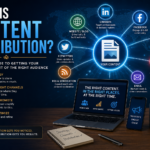
The primary challenge in multi-channel authority is not generating content — it is distributing content effectively across platforms while maintaining quality and consistency. Successful businesses use systematic methods that convert one core piece of content into platform-specific formats. This involves transforming a comprehensive guide into video segments, social posts, a podcast episode, and media pitches — each tailored for its specific platform while maintaining consistent messaging. OmniCast by LeafWorldMedia automates this entire process, taking a single topic brief and distributing it across 300+ platforms in 8 formats within 24–48 hours.
Frequently Asked Questions
Is traditional SEO dead?
No — but it is no longer sufficient as a standalone strategy. Traditional search optimization still holds real value. However, its effectiveness as a primary visibility channel has decreased significantly as Google answers more queries directly without sending traffic anywhere. The businesses winning in 2026 use SEO as one component of a broader multi-channel authority strategy rather than as their primary visibility channel. Consider SEO as one important instrument in a symphony — vital, but far more powerful when the other instruments are playing alongside it.
Why have organic click-through rates declined so dramatically?
Google has deliberately transformed from a search engine that directs users to other sites into a platform that keeps users within its own environment. Featured snippets, AI Overviews, knowledge panels, shopping carousels, and People Also Ask boxes now answer queries directly in search results — without requiring a click to any website. Over 50% of Google searches now end without a single click. Furthermore, organic listings are now pushed further down the page by ads and SERP features, meaning even the #1 ranked position captures less than 20% of clicks.
How does multi-channel authority actually improve SEO?
Multi-channel authority strengthens SEO through several compounding mechanisms. First, brand recognition signals: when users encounter your brand on multiple platforms, they are more likely to click your search results — improving click-through rates and indirectly boosting rankings. Second, natural backlinks: media placements and content distribution generate high-quality editorial backlinks from diverse authoritative domains. Third, AI citation: AI search systems like Google’s AI Overviews and ChatGPT prioritize sources with synchronized multi-platform authority — creating a significant advantage as AI search becomes dominant.
How long does it take to see results from a multi-channel authority strategy?
Initial visibility gains typically occur within 30–60 days as content appears across multiple platforms simultaneously. However, the cumulative authority advantages compound over 3–6 months as your brand becomes recognized across the digital landscape. Unlike SEO rankings that can fluctuate overnight, multi-channel authority provides lasting visibility that strengthens over time. Businesses that maintain consistent multi-channel strategies for 12 months or more report not only increased visibility but fundamental changes in how customers find and perceive their brands.
Should I be on every platform or focus on a few?
Focus strategically rather than spreading yourself across every available platform. The most successful businesses maintain a strong, consistent presence on 5–7 core channels that match their audience demographics, business model, and content capabilities. Quality and consistency across fewer platforms consistently outperforms sporadic presence across many. Additionally, OmniCast’s automated distribution ensures your content reaches 300+ secondary platforms simultaneously without requiring manual management of each one.
How does OmniCast solve the multi-channel authority challenge?
OmniCast is LeafWorldMedia’s proprietary 8-format content synchronization protocol. It transforms a single topic brief into 8 professional content formats — news articles, blog posts, podcasts, videos, infographics, flipbooks, social posts, and video shorts — simultaneously distributed across 300+ high-authority platforms within 24–48 hours. This eliminates the operational complexity of managing multiple channels manually while ensuring your brand appears consistently and professionally across every platform where your customers are searching. Every OmniCast campaign builds permanent authority assets that compound over time.
How do I measure whether my multi-channel strategy is working?
Multi-channel success requires looking at the bigger picture rather than single-channel metrics. Key indicators include a diversifying traffic source mix (less dependence on Google as a percentage of total traffic), increasing branded search volume (people searching directly for your brand), improved conversion rates across all channels, and greater resilience to algorithm updates (when one channel dips, others compensate). The most reliable measure is often the growing balance between search and non-search traffic sources — as this balance becomes more equal, your business becomes more resistant to any single platform’s volatility.
Future-Proof Your Digital Presence with OmniCast
Stop depending on a single platform that is actively reducing the traffic it sends to your site. OmniCast builds synchronized authority across 300+ platforms in 8 formats — so your business generates traffic, leads, and sales regardless of what Google does next.
📞 718-640-2855 | 📧 Info@LeafWorldMedia.com | 🌐 LeafWorldMedia.llc


Leave a Reply