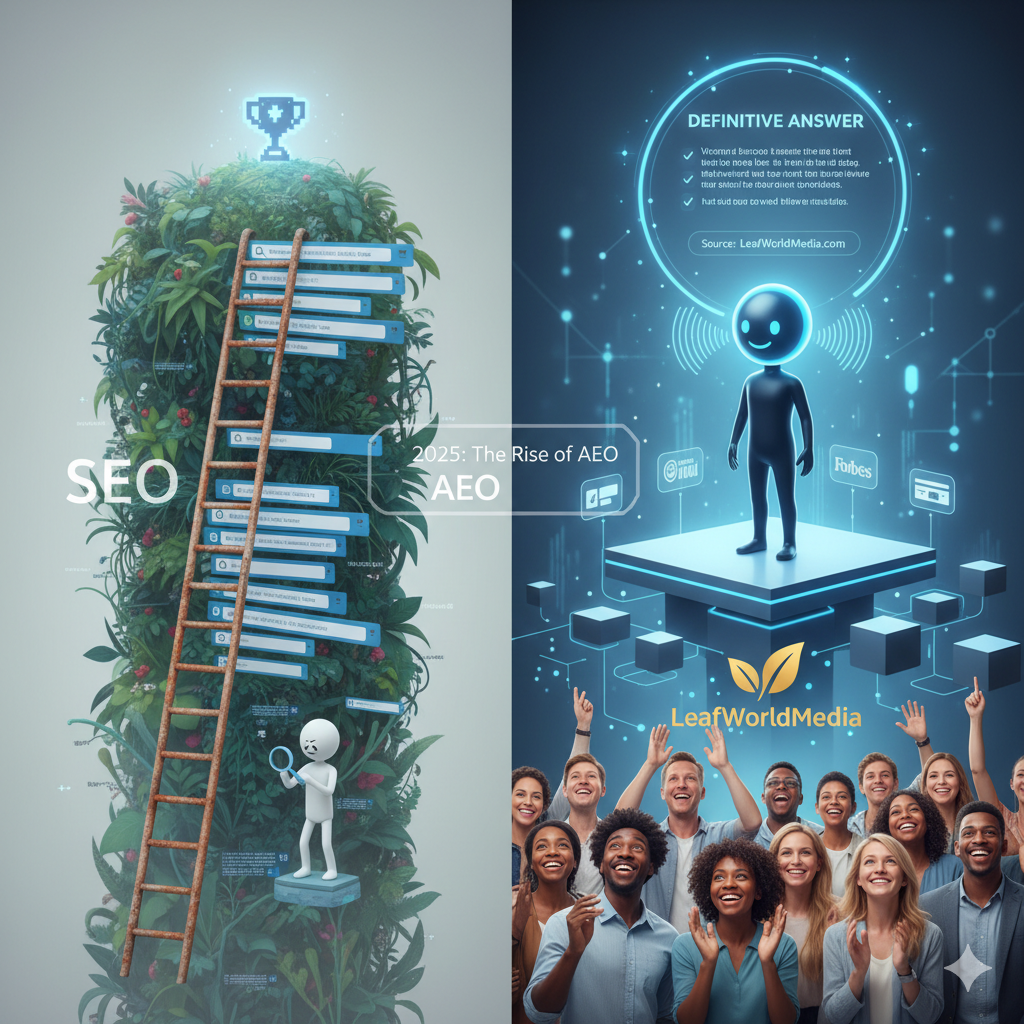
The shift from blue links to AI-generated answers is accelerating — brands that build authority for AI citation now will dominate digital visibility for years ahead.
The search landscape is undergoing its most significant transformation since Google first revolutionized how we find information online. While businesses have invested decades mastering traditional SEO, a new paradigm is rapidly emerging that threatens to make those strategies obsolete: Answer Engine Optimization. The businesses that grasp this shift now will control digital visibility for years to come.
When you ask Google a question, it gives you 10 links. When you ask ChatGPT or Perplexity the same question, it gives you one answer — and cites the brand it trusts most. Answer Engine Optimization (AEO) is how you become that brand. Instead of competing for blue link rankings, you compete to be the source AI engines cite when your customers ask about your industry.
The End of SEO As We Know It
That #1 spot you have worked so hard to achieve? In 2026, it is increasingly irrelevant. As AI-driven answer engines become the primary interface for information retrieval — giving direct answers instead of lists of links — the entire concept of “ranking” is becoming outdated. The future of visibility is not about showing up in search results. It is about being the source that feeds AI answers.
More than 65% of Google searches now conclude without a single website click. This zero-click trend is accelerating as AI systems improve at pulling and synthesizing information directly. Every business still focused solely on traditional SEO metrics is operating on a strategy built for a world that is rapidly disappearing.
The Irreversible Shift:
The progression is clear — from ten blue links, to featured snippets, to AI Overviews, to direct conversational responses. Each step has moved further from traditional website visits and closer to AI-synthesized answers. This evolution is not decelerating. It is accelerating.
The right question is no longer “How can we rank first?” It is: “How can we become the source that AI systems trust and cite?”
How AEO Differs from SEO
| Factor | Traditional SEO | Answer Engine Optimization |
|---|---|---|
| Primary Goal | Rank #1 for keywords | Be cited as the authoritative answer |
| Success Metric | Rankings and organic traffic | Citation frequency and brand authority |
| Competition | Blue links on search result pages | Inclusion in AI-generated responses |
| Key Signals | Keywords, backlinks, technical optimization | Authority signals, structured data, brand credibility |
| Content Strategy | Keyword optimization and traffic | Entity-rich answers across authoritative platforms |
| Visibility Type | One of ten results | The single cited answer |
| Longevity | Dependent on algorithm updates | Builds compounding authority over time |
How AI Answer Engines Choose Their Sources
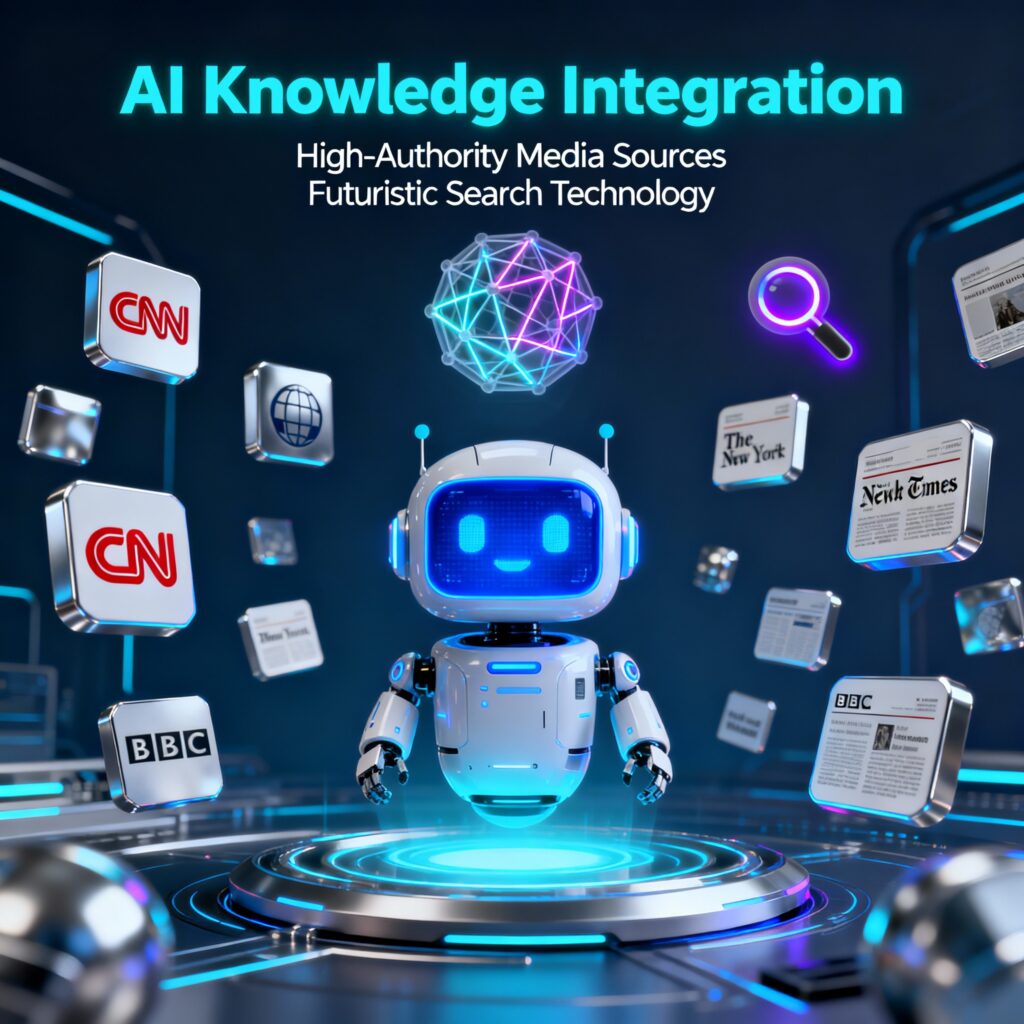
AI answer engines don’t select sources randomly — they use complex authority verification processes that favor brands appearing consistently across multiple high-trust platforms.
AI systems like Google Gemini, ChatGPT, and Perplexity don’t pull their cited sources at random. They use sophisticated methods to identify content that is both trustworthy and authoritative. A single mention in a reputable publication can be more valuable for AEO than dozens of optimized pages on your own site — because AI engines look for consensus across independent sources, not dominance on one site.
What AI Engines Look For When Selecting Sources:
- Consensus signal — the same brand mentioned consistently across multiple independent, authoritative platforms
- Structured data — content marked up in ways AI systems can parse and extract cleanly
- Freshness and recency — especially important for topics that evolve rapidly
- Clear, direct answers — content that answers specific questions without burying the answer in paragraphs of context
- Entity recognition — the brand is recognized as a named, verified entity in the knowledge graph
- Cross-platform consistency — the same brand message appearing in news, podcasts, video, and social simultaneously
The 4 Signs That Traditional SEO Is Losing Its Edge
- Google’s AI Overviews are replacing organic results — the top of the page now belongs to AI-generated summaries, pushing every blue link further down
- ChatGPT and AI tools are becoming the primary search interface — millions of users now bypass Google entirely for research and buying decisions
- Keywords are being replaced by entities and knowledge graphs — AI engines think in concepts and relationships, not keyword density
- Click-through rates on traditional search results are declining — because users are getting their answers without needing to click
The businesses winning in AI search right now are not the ones with the best keywords. They are the ones with the strongest synchronized presence across verified, high-authority platforms — appearing in news articles, podcasts, videos, and social posts all pointing to the same entity as the credible answer in their category. See how LeafWorldMedia builds AI visibility for clients.
Why the Window to Act Is Closing
The AI Training Data Advantage
Large language models are trained using massive datasets encompassing content from across the web. Brands that achieve visibility on high-authority platforms now are more likely to be included in these training datasets — giving them a long-term advantage that becomes progressively harder to overcome as training sets solidify. The opportunity to influence these foundational training sets is finite.
The Compounding Authority Effect
In the AI era, reputation grows through compounding. Brands that position themselves as reliable sources now will be referenced more often in AI responses, which further solidifies their authority, resulting in even more references. This creates a positive feedback loop that becomes increasingly difficult for newcomers to penetrate. The brands that start building this loop today have a structural advantage over every competitor who waits.
The Three Essential Components of Effective AEO
How OmniCast Delivers AEO at Scale
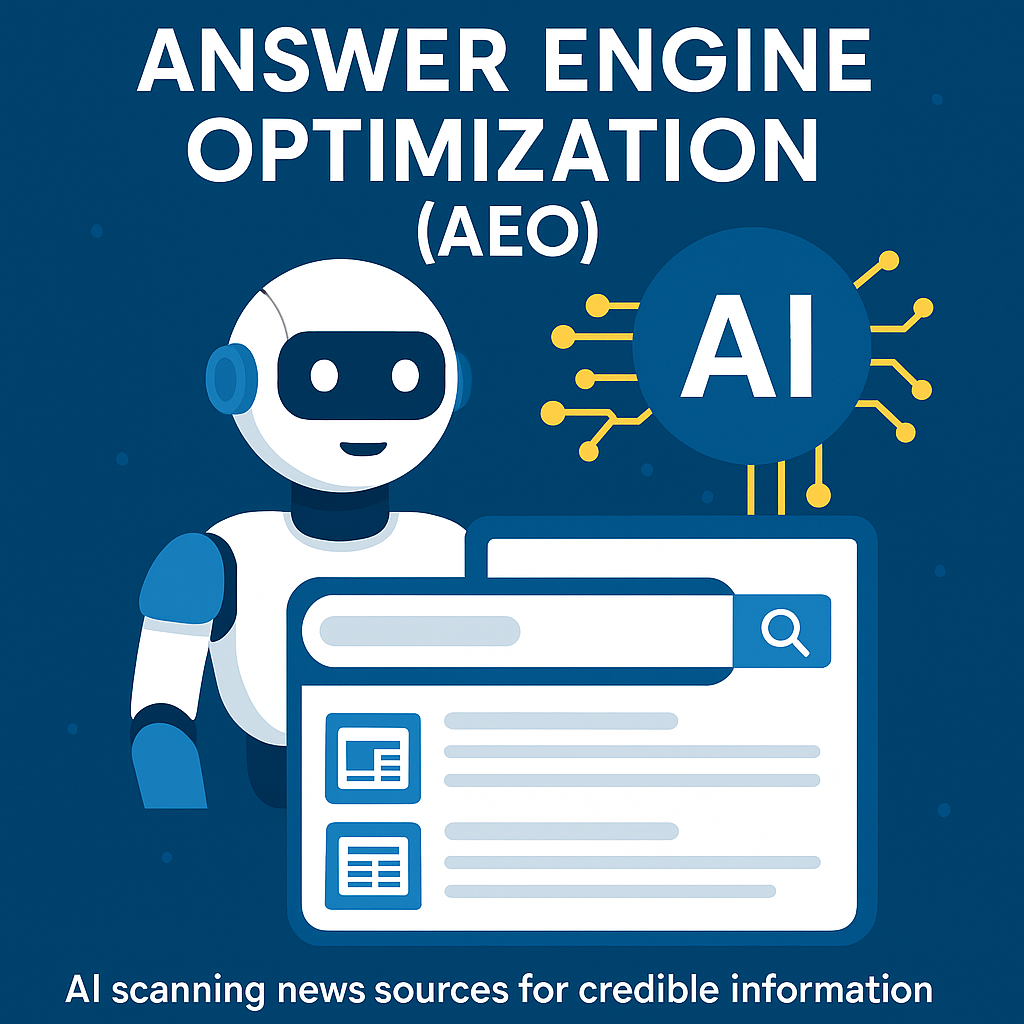
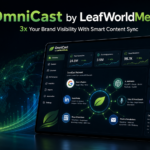
OmniCast automates all three AEO components simultaneously — high-authority media placement, structured content distribution, and entity synchronization across 300+ platforms.
LeafWorldMedia’s OmniCast protocol is specifically engineered to deliver all three AEO components simultaneously — at a speed and scale that manual content creation cannot match.
OmniCast takes a single core topic and transforms it into 8 professional content formats — news articles on FOX affiliates, podcasts on Spotify, videos on YouTube, infographics, flipbooks, social posts, and blog content — simultaneously distributed across 300+ high-authority platforms within 24–48 hours. This synchronized distribution creates exactly the consensus signal AI engines look for when deciding which brands to cite.
Why Synchronization Matters:
Manual content creation — one blog post here, one social post there — creates fragmented signals that AI engines cannot verify as authoritative. OmniCast creates synchronized signals: the same brand, the same message, the same expertise, appearing simultaneously across 300+ platforms in 8 formats. To an AI engine, this looks like verified, consensus authority — exactly what it needs to confidently cite your brand as the answer.
The Web of Authority is built through consistent, synchronized presence across high-authority platforms — making your brand the answer AI gives when customers ask about your industry.
The result is what we call a Web of Authority — an interconnected network of high-authority content that AI engines use to verify your brand as the credible, trustworthy source in your category. Every OmniCast campaign adds permanently to this web. The authority compounds over time rather than disappearing the moment you stop publishing. View the bundle packages for monthly done-for-you AEO starting at $3,499/mo.
Frequently Asked Questions

Start Building Your AEO Authority Today
The brands building AI authority right now will be the ones AI engines cite when your customers ask. Every week without a synchronized content presence is a week competitors are building the authority you could have had.

Leave a Reply