I Did Everything Right. It Was Still Broken.
What a Shopify catalog audit found in my own store, eighteen months after I followed every setup instruction in order.
I have owned businesses since 1999. I have wired buildings, run crews, and handled payroll. In other words, I know what it feels like to be responsible for something that has to work on Monday.
So when I opened an online store, I did it the way I do everything. First I read the instructions. Then I followed them in order. I did not skip steps.
The store launched. It took payments. It made sales.
Then I ran a Shopify catalog audit on my own products. It was broken in nine different ways. Nothing had warned me about any of them.
What the Shopify Catalog Audit Actually Found
These are not hypotheticals. This is my store, my products, one afternoon of looking.
Most of my catalog was invisible
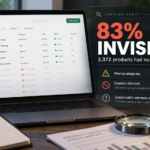
Eighty-three percent of my products had no category assigned. That is 2,372 of them. They were live, priced, and photographed. However, as far as the shopping surfaces were concerned, they did not exist.
There was no error message. Nothing in the admin was red. In fact, the dashboard said everything was fine.
Fifteen products could not be bought
Not low stock. Not a warning banner. Instead, checkout simply refused.
Three separate settings had lined up against me. None of the three is wrong on its own. Together, though, they block the sale completely.
Worse, three of those fifteen were watches I had written articles about. So I was sending readers to pages that would not take their money.
I was making claims I could not back up
591 listings carried warranty claims I could not support. That copy arrived with the supplier feed. Four listings said I was an authorized dealer for a brand I have no agreement with.
I never typed those words. Even so, I published them. They arrived inside the product description, and I had no reason to audit a product description.
Three products described themselves as a different brand entirely. Movado watches carried Emporio Armani boilerplate. Consequently, they sat live for months, because nobody reads 2,800 product descriptions.
Why This Keeps Happening to Small Stores
The easy version of this story blames the platforms. That is not quite right. Unfortunately, the real answer is worse, because switching platforms does not fix it.
The setup flow stops caring after your first sale
Your onboarding is built to get you to one sale. That is the number it is measured on. Therefore everything in it points that direction.
Once you have sold something, it has done its job. Whether you can be found six months later is not on that scorecard.
Nobody validates the data you import
Say you sell products you did not photograph or describe. Then your product pages were written by somebody else, for their business, under their agreements.
That copy arrives complete and professional. Still, no system checks whether it remains true on your domain. It cannot, because it has never seen your supplier contract.
Finding these problems is somebody’s business model
Here is the part that does feel adversarial. A Shopify catalog audit is a product category. Dozens of apps charge monthly to surface exactly what I found.
As a result, nobody has much incentive to build it into the thing you already pay for.
Then the Rules Moved Again
Here is what makes it feel personal.
You spend a year learning SEO. Keywords, titles, internal links, page speed. Eventually you get good at it, and you start ranking.
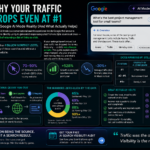
Then ranking stops being the prize. People get their answer on the results page. Consequently, they never click through to you.
So you learn AEO instead. You restructure every page to answer one question on its own. You rewrite work you already rewrote once.
Meanwhile, you cannot tell whether it is working. Nobody sends a report saying you were cited four times this week. If you want the longer version of that problem, I wrote about what actually gets you cited by AI separately.
And underneath all of it sits your product data. In my case, that floor was 83% invisible the entire time.
What I Actually Think Now
I do not think I was careless. Rather, I was working from instructions that were accurate and incomplete at once.
That combination is much harder to catch than instructions that are simply wrong. Every step I followed was correct. None of them was sufficient.
Small operators live in that gap. After all, the people who would catch it for you cost more than the business earns in year one.
It was not the invisible products. Instead, it was learning that content I wrote myself pointed readers at watches they could not buy. I did that work well. It failed anyway, for reasons that had nothing to do with the writing.
Your Free Shopify Catalog Audit Checklist
Assume your store is broken. Not because you did it wrong. Assume it the way you would check fluids on a used truck, even when the seller says it runs great.
On your next free afternoon, do these five things:
- Sort by category. Export your catalog to a spreadsheet, then sort by the category column. If it is empty, you have found your afternoon.
- Find the dead listings. Filter for inventory tracking on with zero quantity. Those are sales you lose today.
- Read your supplier agreement. Write the warranty term, who it covers, and the returns window on an index card.
- Search your own copy. Look for “authorized,” “warranty,” and “guarantee.” Check every hit against that card.
- Buy from yourself. Click the product links inside your own articles. Then actually try to check out.
None of that needs an app or a consultant. Still, all of it needs somebody to look. Right now, that somebody is you. Shopify’s own help documentation covers the mechanics, though not the judgment calls.
Where We Come In
You can run that checklist yourself in an afternoon. I did. If it turns up nothing, you are in good shape and you do not need us.
However, three parts of this do not work as a DIY afternoon. They are also the three that cost the most when they go wrong.
Full catalog audit
We read every product description in your store against your actual supplier agreement. Not a sample. All of them. That means missing categories, unbuyable products, warranty and dealer claims you cannot support, contradictory specs, and brand copy sitting on the wrong brand. You get the findings as a list and the corrections as a file. Then you import it yourself, so nothing changes in your store without you clicking the button.
Claim and policy review
This is the part no app can do, because it requires reading your contract. We compare what your pages promise against what your supplier actually covers. That includes warranty terms, who they cover, returns windows, and dealer status. Then we rewrite the copy so it says something you can defend. Ultimately, this is the work that keeps advertising accounts open.
OmniCast — getting cited, not just ranked
Once the data underneath is clean, a different question starts to matter. Do AI engines trust you enough to quote you? That is built from consistent presence across many independent sources, rather than from anything on your own domain. That is what OmniCast does.
The Honest Ending
I fixed all of it in a day. That meant 2,374 products categorized, 15 checkout blocks cleared, and 591 warranty claims corrected.
One day of work. Eighteen months of being wrong.
That ratio is the whole story. The work was never hard. Knowing the work existed was the hard part.
So that is why I write these. Not because I have it figured out. Instead, because somebody starting this month should not lose eighteen months the way I did.
Questions People Ask Me About This
Did you do something wrong during setup?
No, and that is the uncomfortable part. Every instruction I followed was correct, but none of them was complete. Bulk imports and supplier syncs skip the prompts you get when adding a product by hand. Therefore the merchant with thousands of products gets less guidance than the one with twenty.
Why didn’t the platform warn you?
Because none of it counts as an error. An empty category field is not invalid. A tracked product at zero stock is not a malfunction. Consequently, there is nothing for the system to flag, which is exactly why these problems survive for months.
Wouldn’t an SEO app have caught this?
Apps find broken links, missing meta descriptions, and absent alt text. However, no app can tell you that your warranty text contradicts your supplier contract. No app has read your supplier contract. That part needs a person.
Are you saying Shopify is bad?
No. The fundamentals are solid and I would choose it again. What I am saying is simpler. “It launched successfully” and “it is set up properly” are two different claims, and only the first one ever gets confirmed for you.
How long does a Shopify catalog audit take?
Fixing roughly 2,800 products took me one day. Finding the problems is what takes time. That is only because nobody hands you the list of what to look for.
Should I just pay someone to handle it?
Only after you have run the free version yourself. Export your catalog, sort by category, and try to buy something through your own article links. If that afternoon finds nothing, you probably do not need help. Mine found 2,372 problems.
Start With a Look at Your Catalog
Tell us what you sell and where the products came from. If we do not think there is enough wrong to be worth paying for, we will say so. That answer costs you nothing, and it happens more often than you would expect.
Get in touch →




Leave a Reply