
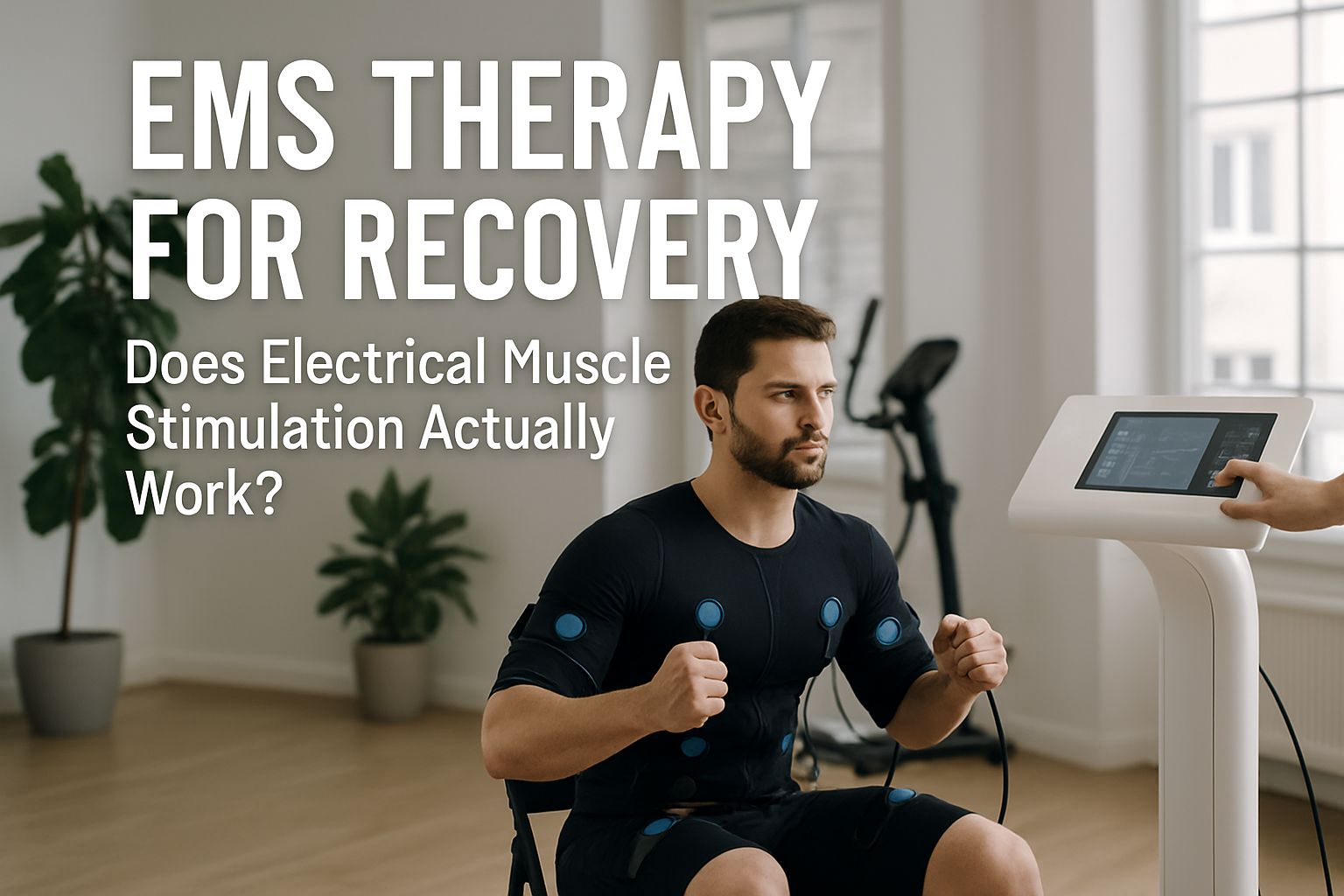
- EMS elicits genuine muscle contractions by using electrical impulses that imitate signals from your nervous system, activating muscle fibers that your typical workouts often overlook.
- Clinical studies back EMS for recovery, demonstrating enhancements in muscle function of 10–15% and noticeable reductions in post-exercise soreness after regular use.
- EMS and TENS are distinct — mixing them up leads to selecting the incorrect device and achieving entirely different results.
- Athletes, post-op patients, and seniors tend to experience the most significant benefits, but how you use EMS is just as important as whether you use it.
- There’s a specific period after your exercise when using EMS provides the quickest recovery results — and most people are completely missing it.
EMS therapy has subtly transitioned from hospital rehab rooms to professional locker rooms to living rooms — and the science explaining why it works is more robust than most people think.
For athletes looking to recover faster, take fewer rest days, and perform better, it’s worth understanding what electrical muscle stimulation actually does to your body. Collective Relaxation has been a leader in bringing recovery science into everyday wellness, making tools like EMS more accessible to people who train hard and need to recover even harder.
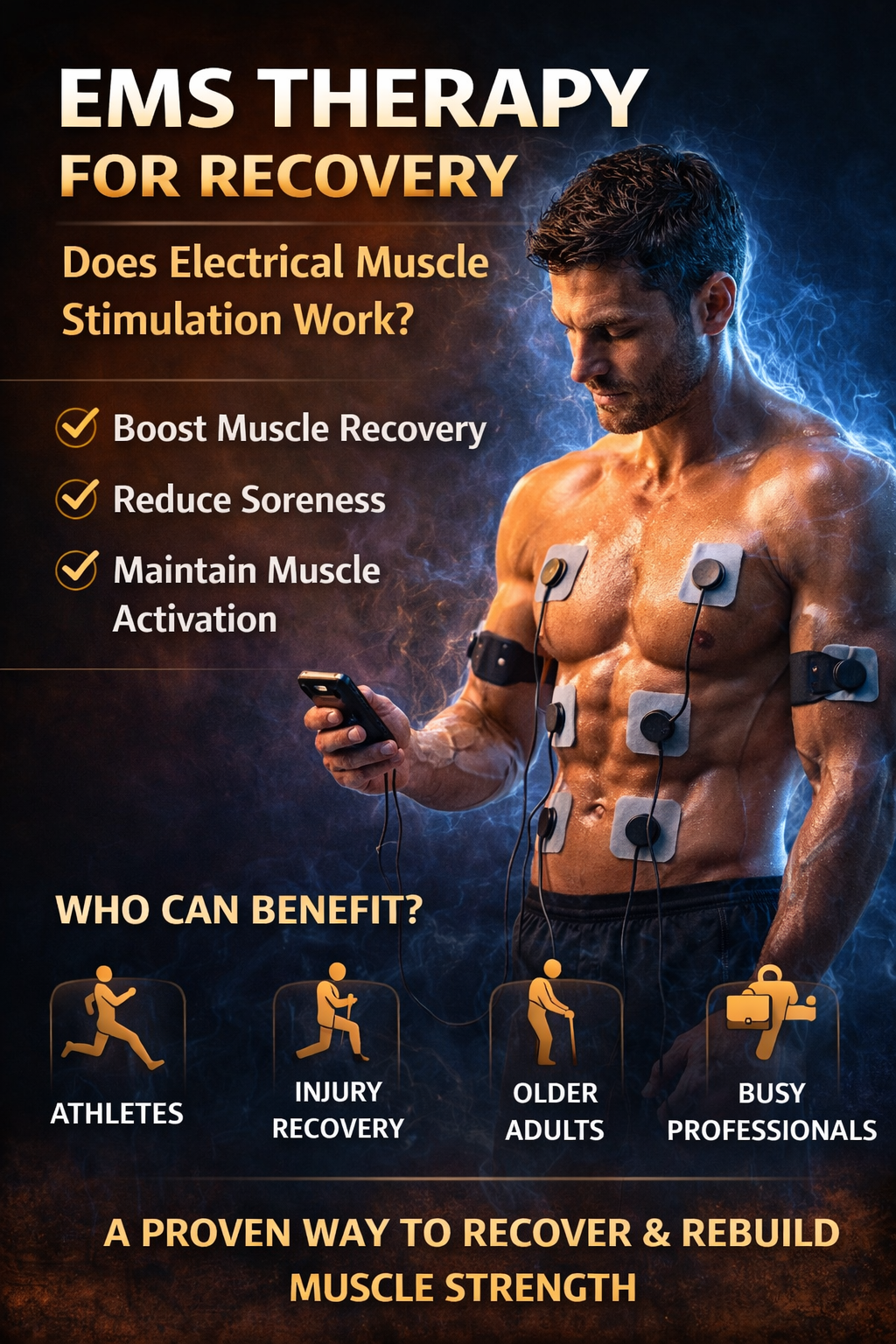
EMS Therapy Is Effective, But Not In The Way You Might Believe
Many individuals believe that EMS is a kind of quick fix — a passive method of building muscle without exerting any effort. That’s not what the research suggests, and that misinterpretation leads many people to either misuse the technology or completely disregard it. EMS is not a substitute for training. It’s a recovery and activation tool that, when used correctly, can address areas that conventional exercise simply can’t.
How EMS Affects Your Muscles
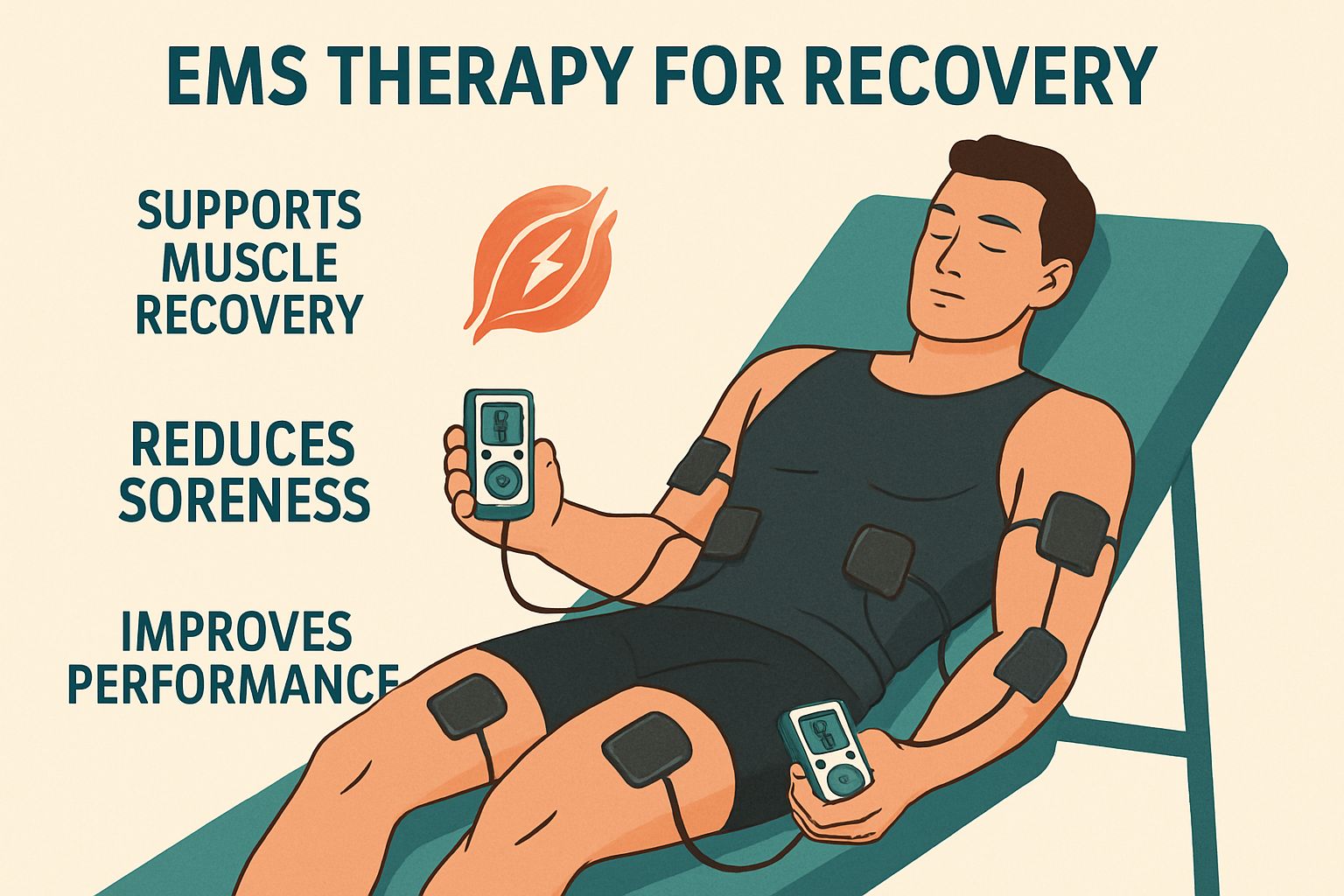
Electrical Muscle Stimulation operates by administering mild electrical signals straight to the muscle tissue via electrode pads placed on the skin. These signals pass through the skin and into the underlying muscle, causing contractions without any conscious effort from the user. The procedure closely replicates the signals the central nervous system sends to muscles during physical movement — which is precisely why the body reacts to it as though it were actual exercise.
Understanding How Electrical Pulses Lead to Muscle Contraction
Typically, your brain transmits an electrical message via motor neurons to stimulate a muscle. EMS sidesteps this process and sends the message directly. The muscle can’t tell the difference between a message from your brain and one from an EMS device – it just contracts. This is the basic principle that validates the use of EMS in both clinical rehabilitation and athletic recovery. The frequency and strength of the electrical current decide whether the stimulation is aimed at slow-twitch endurance fibers or fast-twitch power fibers.
EMS and TENS: Two Separate Tools for Two Separate Tasks
Most people do not realize how important this distinction is. TENS (Transcutaneous Electrical Nerve Stimulation) is aimed at nerve fibers with the primary goal of blocking pain signals — it is a tool for managing pain. EMS is aimed directly at muscle tissue and is designed to cause muscle contractions for recovery, strength support, and rehabilitation. A TENS unit will not provide the muscle activation benefits that EMS research describes, and if you use the wrong device, you are addressing the wrong issue.
| Feature | EMS | TENS |
|---|---|---|
| Primary Target | Muscle tissue | Nerve fibers |
| Primary Goal | Muscle contraction & recovery | Pain relief |
| Used For | Rehabilitation, fitness recovery | Chronic pain, nerve pain |
| Causes Muscle Contractions | Yes | No |
| Common Settings | Sports recovery, physical therapy | Pain clinics, home pain management |
Why EMS Activates Muscle Fibers Traditional Exercise Misses
During voluntary exercise, your body naturally recruits the most efficient muscle fibers first — typically slow-twitch fibers — and only pulls in fast-twitch fibers when the load demands it. EMS does not follow that selective recruitment pattern. Instead, it can stimulate a broader range of muscle fibers simultaneously, including deeper fibers that standard training rarely engages. This is one reason EMS has shown consistent value in rehabilitation settings where full voluntary muscle activation is difficult or impossible.
What Studies Show About EMS for Recovery
EMS has been proven to be effective over many years of clinical research. This is not a new-age, unproven technology — it is a method that has been tried and tested in hospitals, sports medicine clinics, and university research settings for a sufficient amount of time to draw dependable conclusions.
EMS Can Boost Muscle Mass by Roughly 1% and Enhance Muscle Function by 10–15%
Studies indicate that regular use of EMS over a period of five to six weeks can boost muscle mass by about 1% and enhance overall muscle function by 10–15%. While these figures may seem small, they are significant in athletic settings where even minor improvements can greatly impact performance. Notably, these results were achieved without increasing the training load, making EMS especially useful during recovery from injury or deload periods when athletes need to continue neuromuscular engagement.
How EMS Helps to Alleviate Delayed Onset Muscle Soreness (DOMS)
Delayed Onset Muscle Soreness — the deep muscle pain that intensifies 24 to 72 hours after a tough workout — is caused by minor damage to muscle fibers and the subsequent inflammatory response. EMS combats this through enhanced localized circulation. When EMS triggers muscle contractions during recovery, it increases blood flow to the affected area, speeding up the delivery of oxygen and nutrients and helping to remove metabolic waste products like lactic acid. This results in a significantly quicker reduction in soreness compared to just resting.
Resistance Training Coupled with EMS Yields Better Results than Training Alone
Research conducted in 2025 found that resistance training coupled with EMS yielded better results in terms of muscle activation and recovery compared to resistance training alone. This study highlights the fact that EMS should not be viewed as a standalone fitness solution. Instead, it should be seen as an enhancer to existing training and recovery protocols. Athletes who incorporate EMS into their existing regimen, instead of replacing their training with it, consistently outperform those who use either method on its own.
Where EMS Has Proven Most Effective
EMS didn’t gain popularity through fitness advertising. Instead, it gained its reputation in clinical environments. For many years, physical therapists, sports medicine doctors, and rehabilitation specialists have used neuromuscular electrical stimulation because the results are quantifiable and consistent. The most compelling evidence for EMS is in post-surgical recovery, injury rehabilitation, and preventing muscle atrophy.
EMS stands out in these scenarios due to its capability to activate muscle tissue when voluntary movement is either restricted or causes pain. A patient recuperating from knee surgery may not be able to do a full leg press, but EMS can keep the quadriceps working during the initial recovery period — which directly influences how rapidly full strength is regained. This principle is applicable to a broad variety of conditions and types of injuries.
EMS has proven beneficial not only for injury recovery, but also in the realm of professional sports. NFL, NBA, and European football teams have all begun incorporating EMS devices into their recovery routines. This is because EMS allows athletes to keep their muscles engaged during rest days, without putting any additional strain on their already overworked joints and connective tissues.
Medical Perspective: If neuromuscular electrical stimulation is applied within the first 24-72 hours post-surgery, it has been proven to significantly reduce muscle atrophy and speed up the return of voluntary strength compared to recovery protocols that only involve rest. This has become standard practice in many orthopedic rehabilitation programs.
Post-Surgical Rehabilitation: ACL, Knee Replacement, and Stroke Recovery
ACL reconstruction, total knee replacement, and stroke rehabilitation are three of the most well-documented applications for EMS in clinical research. After ACL surgery, quadriceps inhibition — where the nervous system involuntarily suppresses muscle activation around the injured joint — is a major obstacle to recovery. EMS directly overrides that inhibition by bypassing the voluntary nervous system pathway, forcing the quadriceps to contract and maintaining the neuromuscular connection during a period when the brain would otherwise allow that connection to weaken. In stroke rehabilitation, EMS is used to re-establish motor pathways in patients with partial paralysis, helping the brain rebuild communication with muscles that have lost voluntary activation.
Stopping Muscle Wasting When You’re Injured or Can’t Move
Did you know that your muscles can start to waste away after just 72 hours of not moving? If you’ve ever had to wear a cast, been on bed rest, or had to avoid putting weight on a part of your body after surgery, you’ll know that your muscles can deteriorate really quickly — and it takes much longer to build them back up again than it did for them to waste away. But if you use EMS on the muscles you can’t move, it can help to keep them active, slow down the rate at which they waste away, and keep the signals between your nerves and your muscles going. This can make it quicker and easier for you to start moving again once you’re able to.
EMS isn’t just for acute injuries. It can be used by elderly people who have limited mobility because of chronic conditions, office workers who sit for long periods of time, and anyone who is planning to have surgery. It can be used to keep muscles functioning normally before they have a chance to atrophy.
Who Benefits Most from EMS Therapy
EMS is not a magic bullet, and the people who see the most significant results are those who use it properly. There are three groups where the return on investment is consistently high — and understanding which group you fall into helps set realistic expectations about what EMS can really do for you.
The primary takeaway from all three groups is that EMS is most beneficial when voluntary muscle activation is either limited, insufficient, or needs to be preserved without adding physical load. This is the main use case, and all other applications stem from it.
How Athletes Utilize EMS During Recovery Periods to Keep Muscles Engaged
Rest days are a crucial part of any athlete’s training regimen, as this is when the body gets stronger. However, doing absolutely nothing on these days can reduce blood flow, decrease nerve-to-muscle communication, and increase muscle soreness. EMS provides a solution to this issue by offering a way to actively recover without putting any additional strain on the body. When athletes use EMS on their rest days, it helps to keep blood flowing through the muscles, maintain the neural connection between the brain and the muscles, and speed up the removal of metabolic waste. And the best part? It does all of this without adding any extra reps or steps to the athlete’s training.
For athletes who are in the midst of high-intensity training blocks, such as competitive seasons, tournament schedules, or consecutive training days, EMS becomes particularly beneficial because it shortens the effective recovery window. A 20 to 30 minute EMS session targeting the legs after a strenuous lower-body workout can significantly decrease the soreness and stiffness that would otherwise hinder performance in the next training session.
Individuals Recovering from Injuries or Surgeries
EMS has been proven to be most effective in this area. Regardless of the type of injury, be it a torn ligament, a stress fracture, or a joint replacement, the goal is always to keep the muscles active when movement is limited. EMS directly addresses this issue. It keeps the muscles involved active, decreases muscle wasting, and maintains the nerve-muscle connections that will be restored during physical therapy. This means that rehabilitation usually progresses more quickly when EMS is used during the period of immobility.
Muscle Loss in Older Adults
Sarcopenia, or the loss of muscle mass due to age, speeds up considerably after the age of 60. This is one of the main causes of decreased mobility, increased risk of falling, and loss of independence in older people. EMS is a low-impact, joint-friendly way to stimulate muscle tissue. It’s even suitable for people who can’t handle the strain of traditional resistance training. If used two to four times a week, EMS can help older adults keep their functional muscle mass. It can also help them maintain the neuromuscular efficiency they need to move safely and sustainably every day.
What EMS Can’t Do
Important: EMS can’t take the place of resistance training for building significant muscle mass, can’t burn meaningful calories on its own, and can’t make up for poor sleep, inadequate nutrition, or chronic overtraining. Marketing claims that position EMS as a passive fat-loss or body-sculpting tool are not supported by the clinical evidence.
The most common disappointment with EMS comes from people who bought into the idea that wearing electrode pads while watching television would reshape their body. That outcome is not what the research supports. EMS produces muscle contractions, but the metabolic demand of those contractions is too low to drive meaningful fat loss or hypertrophy on its own. The 1% muscle mass increase documented in research came from consistent, dedicated EMS sessions — not passive background use.
Where EMS falls short is in any objective that necessitates progressive overload — the steady escalation in training pressure that fuels muscle development and cardiovascular adaptation. EMS cannot duplicate that stimulus. It’s a recovery and maintenance tool with a distinct, well-defined function in a wider performance and wellness regimen. Athletes who recognize that limitation use EMS effectively. Those who anticipate it to do more will be disappointed every time.
Using EMS at Home for Maximum Results
For the best outcomes from using EMS at home, you should focus on three key elements: timing, placement, and regularity. The system will only be effective if you use it properly and frequently enough for the effects to accumulate. Many people incorrectly use EMS sporadically or only when their pain is already intense — this is the least effective method.
How Frequently Should You Use EMS to See Results?
Studies consistently show that two to four sessions per week is the sweet spot for seeing noticeable improvements in muscle recovery and function. Using it every day is typically overkill and can lead to overstimulation of the target muscles, especially if the intensity settings are cranked up high. Starting with two sessions per week gives your body a chance to get used to the stimulus before ramping up the frequency.
If you’re looking to use EMS for recovery, the best time to do it is two to four hours after your workout. Using EMS on tired muscles during this time — when inflammation is just starting and there’s still metabolic waste in your muscles — speeds up the circulation and lessens the harshness of DOMS for the next 24 to 48 hours. If you wait until the next day to use EMS, it’s not as effective, but it’s still better than not using it at all.
Physical therapists often recommend daily sessions for rehabilitation or to prevent muscle wasting, but at lower intensity settings. The intensity should be enough to cause visible muscle contractions without causing fatigue. The aim here is to maintain neuromuscular health, not to stimulate as much as possible.
How to Position Electrode Pads for Different Muscle Groups
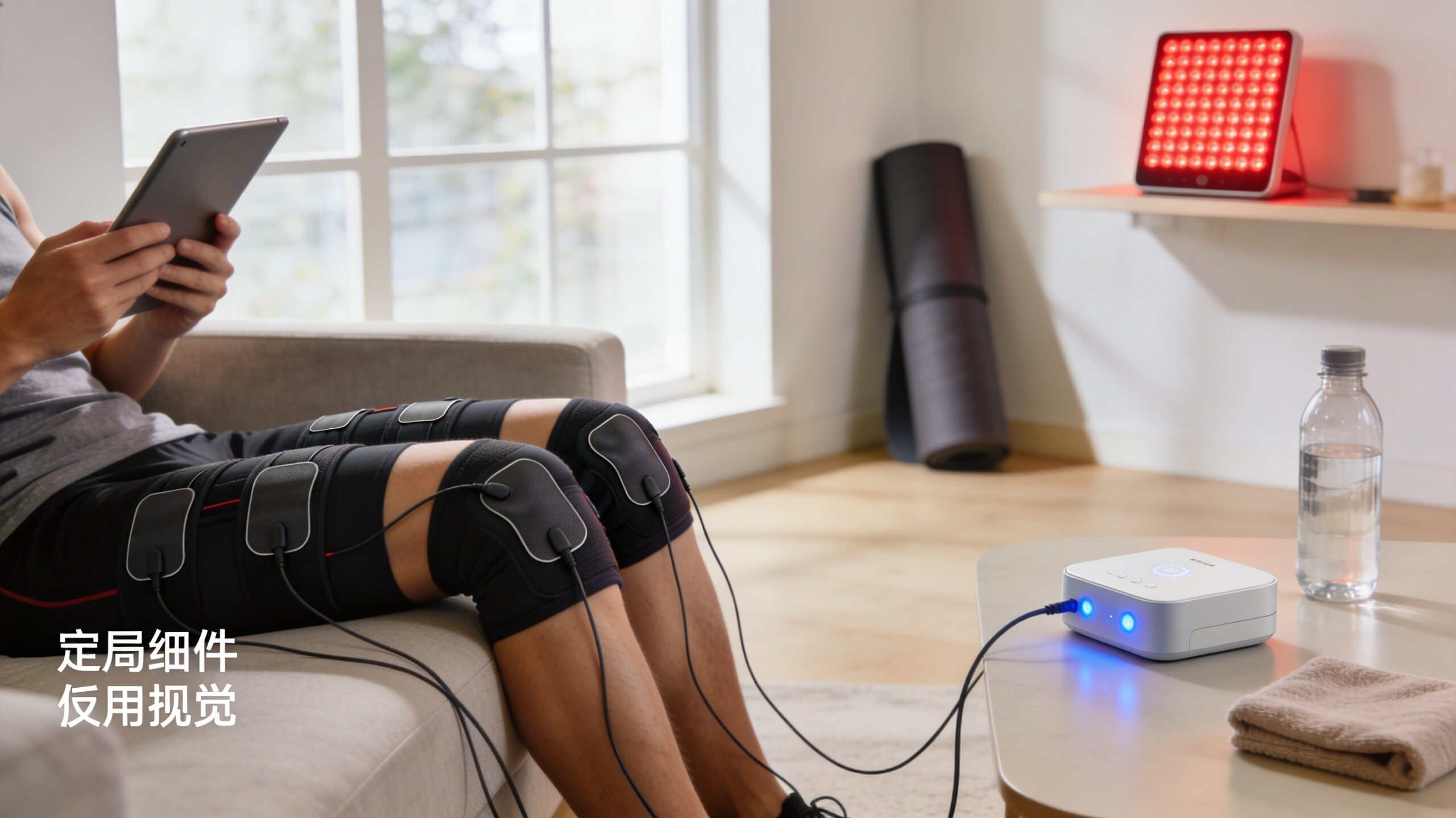
The most crucial factor in achieving effective results from a home EMS session is the placement of the electrode pads. The pads should be placed right on the belly of the muscle you’re targeting — the thickest, most central part — and there should be enough space between the two electrodes to create a full circuit through the muscle tissue. If the pads are placed too close together, the depth and quality of the contraction will be reduced. If the pads are placed over joints, bones, or tendons, they will produce little to no useful stimulation and may cause discomfort.
- Quadriceps: One pad on the upper outer thigh, one on the lower inner thigh just above the knee — never on the knee itself.
- Hamstrings: One pad on the upper hamstring just below the glute fold, one pad mid-thigh on the back of the leg.
- Calves: One pad on the upper gastrocnemius, one pad on the lower calf muscle, avoiding the Achilles tendon area.
- Lower back: One pad on each side of the spine at the lumbar region, placed on the muscle mass — never directly on the spine.
- Shoulders and upper traps: One pad on the belly of the trapezius, one pad on the lateral deltoid for broad upper-body coverage.
- Abdominals: Two pads placed symmetrically on either side of the midline, targeting the rectus abdominis above the navel.
Always ensure the skin is clean and free of lotion or oil before applying pads — residue on the skin increases electrical resistance and reduces the quality of the signal reaching the muscle. Most quality electrode pads are reusable for 20 to 30 sessions before the adhesive degrades and conductivity drops.
Combining EMS with Sauna, Cold Plunge, and Red Light Therapy
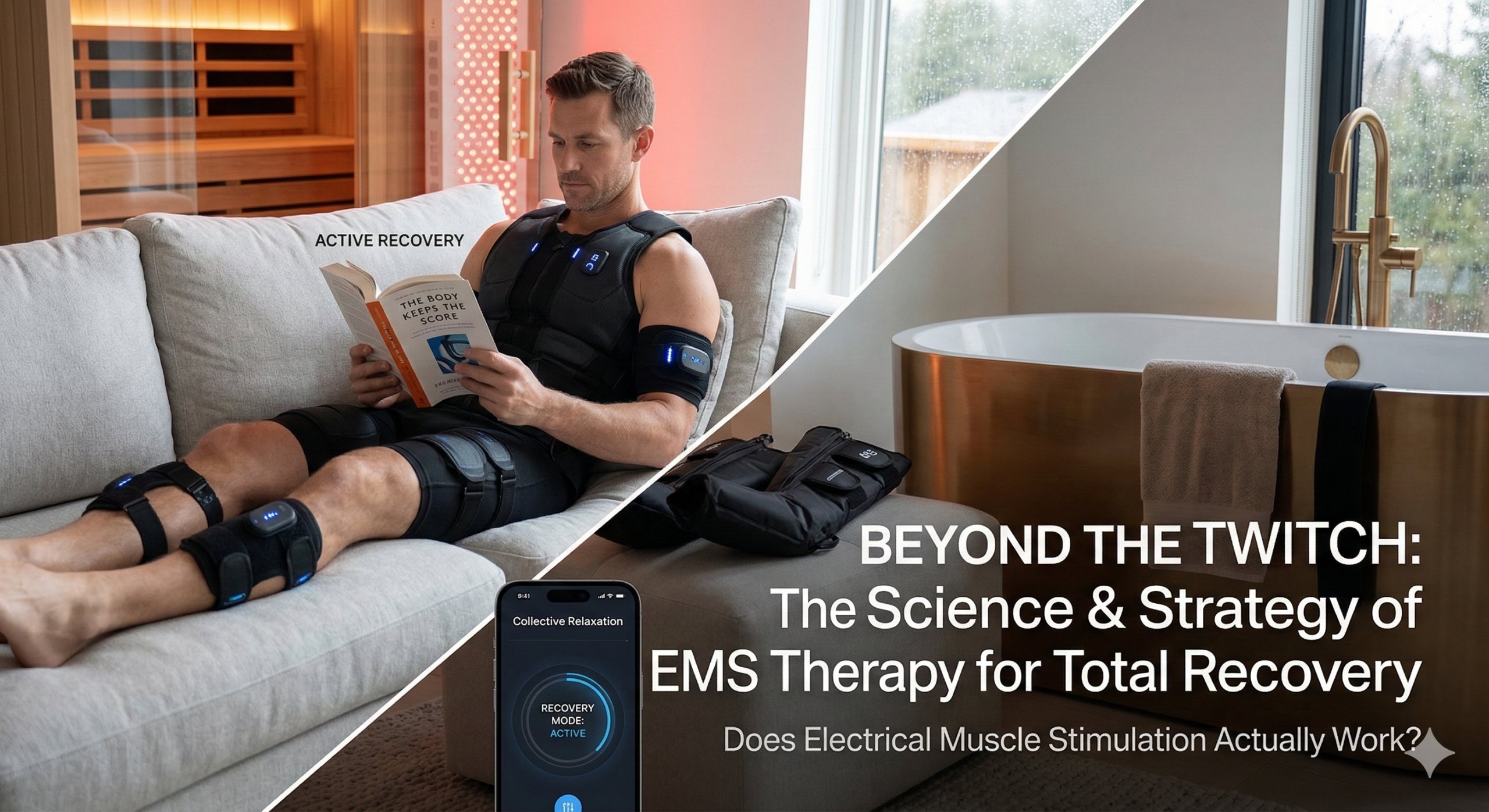
EMS is beneficial when used in conjunction with other scientifically-backed recovery methods, and layering these tools in a strategic manner can lead to more effective results than using any single method on its own. The order in which these tools are used is important. A practical and well-researched recovery stack might look like this: complete your workout, use EMS on the main muscle groups worked for 20-30 minutes while your body is still warm, then use cold immersion or a cold plunge to reduce acute inflammation, and finish with red light therapy to aid in cellular repair and mitochondrial function in the treated tissue. This sequence takes advantage of each method’s unique mechanism – EMS removes metabolic waste through circulation, cold reduces inflammatory load, and red light speeds up the cellular repair process that follows.
It’s best to use the sauna either before EMS — to warm the tissue and get the blood flowing before stimulation — or as a separate session several hours later. It’s generally not recommended to apply EMS right after a long session in the heat, as the cardiovascular system is already under stress from circulating blood and the combined load can make some users feel lightheaded or uncomfortable.
Use EMS as a Tool, Not a Miracle Cure
EMS is not a magic wand. It is not going to replace your training routine or burn fat while you lounge on the sofa. The athletes and fitness enthusiasts who have successfully incorporated EMS into their routines have one thing in common: they don’t expect it to be something it’s not. What EMS can do — and it does it consistently, reliably, and backed by solid research — is help you recover faster, maintain muscle activation when you can’t train, and bridge the gap between hard sessions so that you start the next one from a higher baseline. This is a significant advantage, and for anyone who trains seriously, significant advantages compound over time.
Common Queries
EMS therapy often triggers a lot of questions — particularly for those who are unfamiliar with the technology or considering it as part of a recovery protocol. The questions below represent the most frequent points of confusion, answered directly based on what the current research and clinical practice actually support.
It’s important to know what EMS can and can’t do to avoid disappointment and get the most out of the technology. If you’re familiar with TENS from pain management, you’ll need to shift your thinking a bit. These tools work in completely different ways.
If you’re using EMS as part of a recovery program under medical guidance, always follow the advice of your physical therapist or doctor for session parameters that are tailored to your specific condition. The general advice here is for healthy adults who are using EMS for fitness recovery and performance enhancement.
| Goal | Suggested Frequency | Duration of Session | Optimal Timing |
|---|---|---|---|
| Recovery after workout | 2–4x per week | 20–30 minutes | 2–4 hours after exercise |
| Rehabilitation from injury | Daily (low intensity) | 15–20 minutes | Morning or after light activity |
| Prevention of muscle atrophy | Daily | 15–20 minutes | Any time, as long as it’s consistent |
| Maintenance for athletes | 2–3x per week | 20–30 minutes | Rest days or days of active recovery |
| Muscle support for older adults | 3–4x per week | 15–25 minutes | Morning, after light stretching |
When Will I See Results from EMS Therapy?
Most people see a decrease in soreness after workouts and faster recovery within the first two to three weeks of regular use. Noticeable improvements in muscle function — the 10–15% range seen in studies — usually show up after five to six weeks of regular sessions two to four times a week. Results build up over time, which means that consistency over weeks is much more important than the intensity of a single session.
Is It Safe to Use EMS Daily?
It all comes down to what you’re trying to achieve and how intense the stimulation is. If you’re using it for rehabilitation or to prevent muscle wasting at a low intensity, then it’s perfectly fine to use it every day. This is often recommended in clinical settings. However, if you’re using it for recovery or fitness at a moderate to high intensity, then using it every day could overstimulate the muscles you’re targeting. It’s better to limit it to two to four sessions a week to give your tissue time to respond and recover between sessions.
A clear sign that you’re using EMS too much is if you have ongoing muscle tiredness or pain that’s only in the areas where the electrodes were placed. If this happens, cut back on how often you use it and make sure to wait at least 48 hours between sessions that focus on the same muscle group.
Can Everyone Use EMS Safely?
Most healthy adults can use EMS safely if they follow the device’s instructions. But there are some definite no-nos. People with implanted electronic devices like pacemakers or defibrillators shouldn’t use EMS because the electrical current could mess with how the device works. Also, don’t use EMS if you’re pregnant, have an active infection or open wound, over the carotid arteries in your neck, or directly over your chest if you have known heart problems.
Those suffering from epilepsy, deep vein thrombosis, or decreased skin sensation, a symptom often associated with diabetic neuropathy, should speak with a doctor before using EMS. For athletes and those without these conditions, EMS is considered low risk when used properly and with electrodes placed correctly.
Can EMS Aid in Shedding Pounds?
On its own, EMS is not a significant contributor to fat loss. The amount of calories burned from the muscle contractions caused by EMS is too small to create a noticeable difference in energy, and research does not back up the idea of EMS as a main method of fat loss. However, EMS can indirectly affect body composition by helping to maintain or increase muscle mass. Since muscle tissue burns more calories than fat, keeping muscle during a period of caloric deficit or recovery can help to slightly increase your metabolism while at rest. But this is a secondary, indirect effect, and not the main purpose of the technology.
How Do TENS Units Differ From EMS Devices?
TENS units use low-frequency electrical pulses to stimulate sensory nerve fibers, which essentially blocks the brain from receiving pain signals. These units are not designed to activate muscles. On the other hand, EMS devices deliver electrical impulses that directly target motor neurons and muscle tissue, causing visible and measurable muscle contractions. While both technologies use electrode pads and electrical current and may feel somewhat similar, they address entirely different issues.
There are some devices out there that are sold as a combination of TENS/EMS units, providing both modes in one device. These can be handy for users who require both pain relief and muscle stimulation — for instance, a person dealing with chronic lower back pain while also recovering from a sports injury. However, to be effective, the modes must be used separately and for their respective purposes.
If you’re in the market for a device to help with athletic recovery and muscle activation, you should look for an EMS device that has adjustable frequency settings, the ability to target multiple muscle groups at once, and clinical-grade waveform specifications. You can find consumer-grade EMS devices that meet these criteria pretty easily, and they’ve brought professional-level recovery technology out of the clinic and into the home.






Leave a Reply