
Article Quick Overview: What the Research Says About Relieving Stress
- The sauna, cold plunge, and massage each directly stimulate the vagus nerve and the parasympathetic nervous system — the body’s natural “off switch” for anxiety and chronic stress.
- Order matters: using all three therapies in the correct sequence creates a compounding reset of the nervous system that none of them can achieve on their own.
- The cold plunge triggers a spike in dopamine that studies suggest can last several hours after just one session — one of the most underappreciated natural mood enhancers available.
- Chronic stress physically rewires the brain to perceive fear and threat — but consistent use of heat, cold, and touch exposure can reverse that pattern.
- Collective Relaxation offers resources and tools for wellness that are backed by experts and make this type of nervous system reset achievable at home — more on the protocol later.
Your body isn’t broken — it’s just trapped in a cycle it doesn’t know how to break.
Many of us experience anxiety, chronic stress, poor sleep, and emotional exhaustion. However, these are not character flaws or permanent conditions for most people. They are physiological states that your nervous system has learned to default to. Because they are physiological, they respond to physical inputs. Sauna therapy, cold plunge immersion, and massage are where these come in as serious, evidence-supported tools for mental health recovery.
While the wellness industry often focuses on the importance of mindset and meditation, there’s a quicker and more direct way to soothe the nervous system: through physical work on the body itself. Collective Relaxation has developed their platform around this very concept – that strategic physical recovery methods can sometimes achieve what years of mental effort can’t.
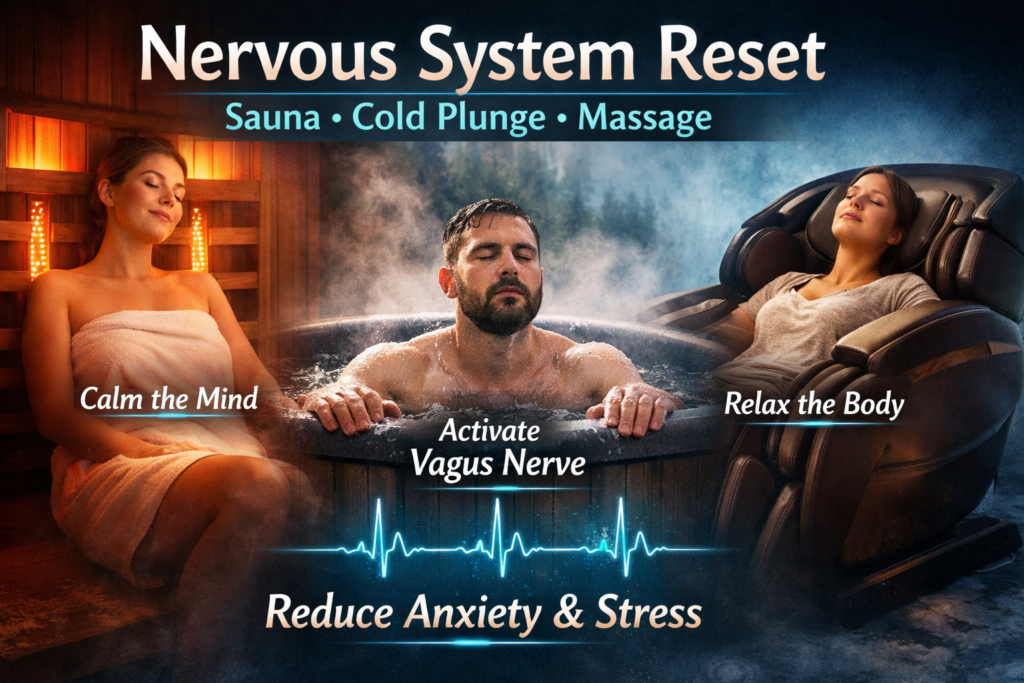
Your Body is Already Equipped to Relax
Deep relaxation is a natural function of your body. However, the issue is that contemporary life sets off the alarm system more quickly than the body can restore it.
Understanding the Sympathetic and Parasympathetic Nervous Systems
Your autonomic nervous system is split into two opposing functions. The sympathetic nervous system is your body’s gas pedal, it triggers the fight-or-flight response, releasing cortisol and adrenaline into your body when it senses danger. The parasympathetic nervous system is your body’s brake, it controls rest, digestion, recovery, and emotional regulation. Anxiety can be described as your sympathetic system being overactive for too long, while your parasympathetic system is too weak to slow things down.
Understanding the Impact of Chronic Stress on Your Fight-or-Flight Response
Let’s get to the heart of the matter: the nervous system has the ability to learn. When the sympathetic system is continuously activated — due to work stress, relationship problems, lack of sleep, or constant digital exposure — the body starts to consider this heightened state of alert as “normal.” The parasympathetic system essentially loses its ability to take control. Cortisol levels remain high. Heart rate variability (HRV) decreases. Sleep quality worsens. Muscle tension becomes a constant problem. And this cycle continues to perpetuate itself.
This isn’t about lacking self-discipline. It’s about needing to reset your nervous system. And that requires physical tools for recalibration — not just an optimistic mindset. Consider incorporating practices like cold plunge therapy to aid in the process.
Interrupting the Stress Cycle with Heat, Cold, and Touch
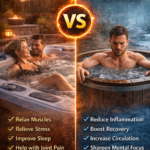
Individually, sauna, cold plunge, and massage each tackle the stress cycle from a unique physiological perspective. Collectively, they form what is becoming more commonly known as contrast therapy among researchers and clinicians. This intentional shift between controlled stress and deep recovery helps train the nervous system to be more adaptable and resilient. For more information on the benefits of cold plunge, you can read about the comparison between hot tub and cold plunge.
Therapy Primary Mechanism Key Anxiety Benefit Sauna Heat-induced parasympathetic rebound Cortisol reduction, endorphin release Cold Plunge Vagus nerve activation, dive reflex Dopamine spike, nervous system reset Massage Touch-based oxytocin and serotonin release Muscle tension release, cortisol drop
Each of these modalities speaks a language your nervous system already understands. The goal is to use them strategically — not randomly — to produce lasting shifts in your baseline stress levels.
The Role of Sauna Therapy in Stimulating the Parasympathetic Nervous System
For centuries, people in Finland, Russia, Native America, and Japan have been using sauna bathing for more than just cleanliness. They’ve used it to rejuvenate their minds. Today’s neuroscience is finally shedding light on why it’s so effective.
Here’s what happens when you step into a sauna:
- Your body’s core temperature increases, which triggers a cardiovascular response similar to what you’d get from moderate exercise.
- Heat shock proteins are activated, which help protect your cells from damage caused by stress.
- Your body releases endorphins and dynorphins, which can help relieve pain and make you feel euphoric.
- The period of cooling down after a sauna session can trigger a strong parasympathetic rebound.
- Regular sauna sessions can help improve your heart rate variability (HRV), which is an important marker of how resilient your nervous system is.
So, the sauna doesn’t just help you relax your muscles. It can also help reset your stress response system — as long as you use it properly.
How Your Brain and Body React to High Temperatures
Entering a sauna with a temperature range of 160°F to 195°F (71°C to 90°C) triggers your body to interpret the heat as a manageable stressor. Your heart rate spikes, often reaching between 120 to 150 beats per minute, and your sympathetic nervous system temporarily turns on. Blood flow shifts toward the skin to aid in cooling, circulation significantly increases, and your core temperature starts to elevate.
What is important to note here is what takes place in the brain during and after this heat stress. The hypothalamus — your body’s temperature regulator and a crucial controller of stress hormones — reacts to sustained heat exposure by adjusting cortisol output. At the same time, the brain boosts production of beta-endorphins and triggers pathways related to mood improvement and pain reduction.
There’s also proof that exposure to heat boosts the presence of serotonin in the brain — the same neurotransmitter that many anti-anxiety and antidepressant drugs target. This occurs through processes that involve the metabolism of tryptophan and changes in blood-brain barrier dynamics during exposure to heat.
Lowering Cortisol Levels and the Relaxation Rebound Post-Sauna
The most important part of a sauna session for reducing anxiety isn’t the heat — it’s the recovery period right after. As your body cools down, there is a noticeable parasympathetic rebound: your heart rate slows, your blood pressure becomes normal, and your cortisol levels decrease. This rebound effect is one of the main reasons people report feeling deeply relaxed and mentally clear in the 30 to 60 minutes after a sauna session. Research that has been published in peer-reviewed journals has recorded measurable decreases in cortisol after sauna bathing, especially with sessions that last 15 to 20 minutes at traditional Finnish temperatures.
Releasing Endorphins and Serotonin When Exposed to Heat
When you step into a sauna, your body releases endorphins. This is not just a theory; it’s a proven fact. The amount of endorphins your body releases is similar to the amount released during moderate aerobic exercise, according to some studies. This release of endorphins has a natural pain-relieving and mood-boosting effect that can last for hours after you step out of the sauna. When you combine this with the activation of the serotonin pathway that we discussed earlier, it’s clear that sauna therapy is a powerful, natural way to improve your mood.
Which is More Effective for Alleviating Anxiety: Infrared or Traditional Sauna?
Let’s get straight to the point. Traditional Finnish saunas work at higher temperatures (160°F to 195°F) and use either dry heat or steam (löyly). On the other hand, infrared saunas operate at lower temperatures (120°F to 140°F) but use infrared light to directly heat the body instead of heating the air around it.
Both types of saunas are beneficial for relieving anxiety, but they work in slightly different ways. Traditional saunas stimulate a stronger cardiovascular response and a stronger post-session parasympathetic rebound, which can be more effective in reducing acute anxiety. Infrared saunas, on the other hand, are usually better tolerated by people who find intense heat overwhelming. This is important if physical intensity triggers anxiety or panic responses.
The most effective sauna for anxiety is ultimately the one you’ll use regularly. Both work. Consistency is the factor that results in long-lasting neurological change.
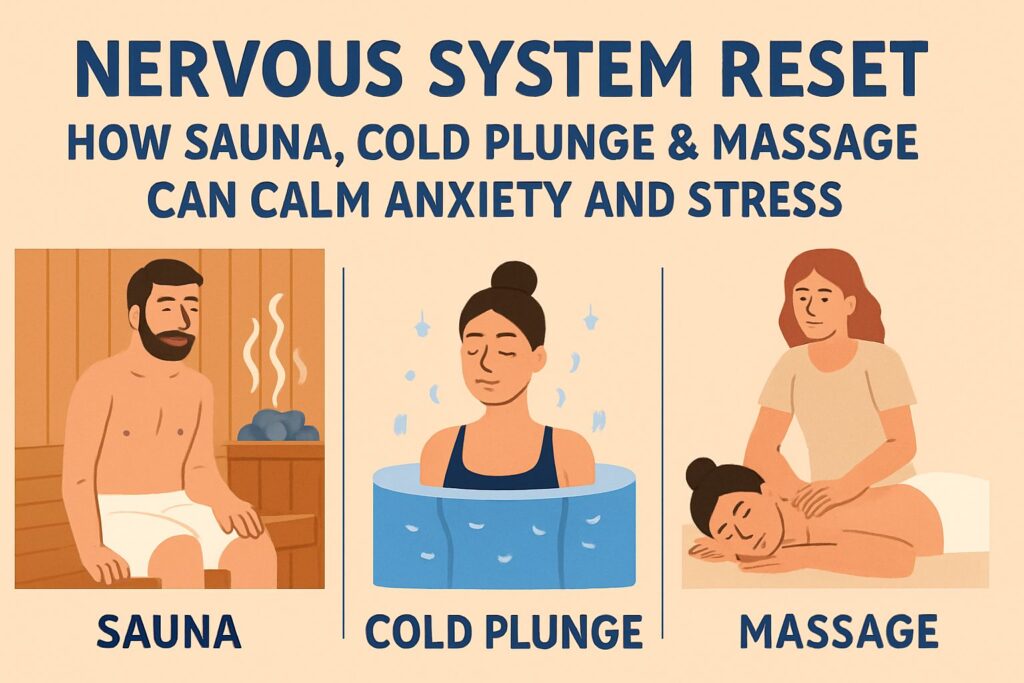
The Vagus Nerve Reset and Cold Plunge
Think of the sauna as a controlled storm that readies the nervous system, and the cold plunge as the lightning bolt that demands a complete reset — the science supporting this is truly astonishing.
How Your Heart Rate Drops Instantaneously With The Dive Reflex
As soon as your face or body comes into contact with cold water, usually under 60°F (15°C), a primal survival mechanism known as the mammalian dive reflex is activated. This reflex immediately slows down your heart rate (bradycardia), constricts your blood vessels, and reroutes blood flow to the brain and vital organs. Your heart rate can decrease by 10 to 25 percent within the first half minute of being immersed in cold water.
How Stimulating the Vagus Nerve Helps Reduce Anxiety
The vagus nerve is the longest cranial nerve in your body, stretching from your brainstem all the way down to your heart, lungs, and digestive system. It is the main channel of your parasympathetic nervous system — and one of the quickest ways to stimulate it is by immersing yourself in cold water. When your vagus nerve is triggered by cold exposure, it sends a direct inhibitory signal to your amygdala, the part of your brain that detects fear and threats. This is a big deal for people with anxiety: a cold plunge isn’t just soothing — it actually biochemically disrupts the fear loop at its root.
The Aftermath of a Cold Exposure Dopamine Spike and Its Duration
- Dr. Andrew Huberman, a neuroscientist, cites research that indicates that immersing oneself in cold water can lead to a rise in dopamine levels by up to 250% above the baseline
- Unlike the dopamine spike that results from eating food, using substances, or using social media — which peaks quickly and then crashes — the dopamine levels rise slowly but steadily after cold exposure, and this can last from two to four hours
- This sustained release is linked to improved motivation, mood stability, and reduced anxiety, as opposed to the crash-and-crave cycle that other dopamine triggers cause
- Norepinephrine levels also rise significantly during cold immersion — by up to 300% in some studies — which helps to improve focus and reduce brain fog
- The increase in both dopamine and norepinephrine levels makes the period after a cold plunge one of the most productive and mentally clear periods of the day for many practitioners
This neurochemical response is one of the strongest arguments for using a cold plunge as a natural way to treat anxiety. Most anxiety is characterized by low dopamine tone and dysregulated norepinephrine — exactly the two systems that cold exposure directly corrects.
Instead of resisting the cold, the trick is to breathe through it. During the initial 30 seconds of immersion, slow, controlled exhales activate the parasympathetic system, even as the cold stimulates the sympathetic system. This dual activation, which may seem contradictory, is exactly what trains the nervous system to endure and recover from stress more effectively over time. For those interested in optimizing their cold exposure, here’s a useful cold plunge temperature guide to consider.
Even a brief exposure can produce measurable results. Studies have shown that sessions lasting only two to three minutes at temperatures between 50°F and 59°F (10°C to 15°C) can cause significant changes in neurochemicals. You don’t have to endure extreme cold or long durations to reap the benefits of anxiety relief — consistency is much more important than intensity.
Using Massage to Regulate the Nervous System
Touch is not a luxury — it is a biological necessity. Our skin contains a unique type of nerve fiber known as C-tactile afferents that specifically respond to gentle, stroking touch and send signals directly to the brain’s social bonding and emotional regulation centers. These fibers are not activated by pressure or pain, but rather by the kind of deliberate, caring touch provided in therapeutic massage. When they fire, they trigger the release of oxytocin, reduce the reactivity of the amygdala, and shift the entire nervous system towards parasympathetic dominance.
Massage therapy is one of the most well-studied non-drug interventions for anxiety. Research consistently shows that massage therapy can lower cortisol levels, improve HRV, and decrease self-reported anxiety scores. It works through several overlapping mechanisms — hormonal, neurological, and muscular — which is why it provides immediate relief and can have cumulative effects with regular use.
How Physical Touch Can Reduce Cortisol and Increase Oxytocin
Studies have shown that massage therapy can reduce cortisol by up to 31%, while at the same time increasing serotonin by up to 28% and dopamine by up to 31%, according to the International Journal of Neuroscience. Oxytocin, also known as the “bonding hormone,” increases significantly during a massage, and its effects are more than just emotional warmth. Oxytocin actively reduces cortisol production, lowers blood pressure, and reduces the amygdala’s threat response. For those suffering from chronic anxiety, this hormonal shift can feel like the first real breath of fresh air in months.
How Releasing Muscle Tension Can Break the Cycle of Stress
Anxiety doesn’t just live in your head — it also resides in your body as chronic muscle tension. The trapezius, jaw, hip flexors, and psoas are common places where unprocessed stress is stored. This isn’t just a metaphor; when your body is constantly activated by the sympathetic nervous system, these muscle groups hold protective contraction patterns that can last long after the stressor is gone. Massage can disrupt these patterns by increasing local circulation, breaking up adhesions in the fascia, and triggering the muscle spindle relaxation reflex. When your body lets go of this tension, your brain gets feedback that it is physically safe — and that signal alone can down-regulate the sympathetic nervous system.
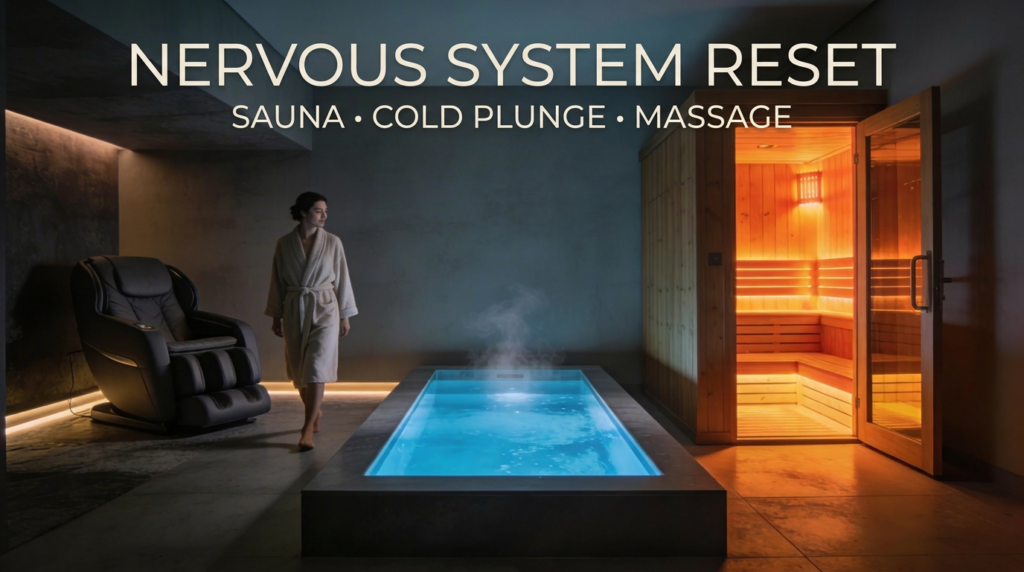
The Sauna, Cold Plunge, and Massage Protocol That Gets Results
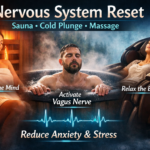
While each of these therapies provides significant benefits on their own, when used in the correct sequence, they create something even more potent than their individual parts. They create a full-cycle nervous system reset that takes your body from a state of sympathetic overdrive to deep parasympathetic recovery within a single session.
The order matters. First, the sauna provides a controlled heat stress and activates the cardiovascular system. Second, the cold plunge provides a sharp vagal reset and a surge of neurochemicals. Third, the massage maintains the parasympathetic state and prevents the body from returning to a state of tension. If you don’t follow this order, you lose the cumulative effect.
Depending on your experience level, the whole procedure can take anywhere from 45 to 75 minutes. Here’s a step-by-step guide on how to do it.
Step 1: Sauna Session — Using Heat as a Controlled Stressor
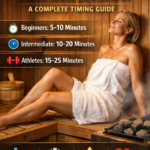
Begin with a 15 to 20 minute session in a sauna set to a temperature between 160°F and 195°F. If you’re new to using a sauna, start at a lower temperature — 150°F to 160°F — and gradually increase the heat over a period of two to three weeks. The aim during this phase is not to withstand as much heat as possible, but to remain relaxed and breathe slowly. Breathing through your nose throughout the session enhances the parasympathetic priming effect and prevents the session from feeling like a panic trigger instead of a recovery tool.
Staying hydrated is a must. Make sure you drink at least 16 to 20 oz of water before you go in, and have more ready for when you come out. If you get dehydrated while you’re in the sauna, your cortisol levels can go up, which is the exact opposite of what you want.
Experience Level Sauna Temperature Session Duration Rounds Beginner 150°F – 160°F 8 – 12 minutes 1 round Intermediate 160°F – 180°F 15 – 20 minutes 1 – 2 rounds Advanced 180°F – 195°F 20 – 25 minutes 2 – 3 rounds
Exit the sauna when you feel your heart rate is elevated and you have a light sweat — not when you feel dizzy or overwhelmed. This is a therapeutic tool, not an endurance challenge. The mental shift matters: approach heat as a controlled, intentional stress you are choosing, not something happening to you.
Once you get out of the sauna, spend a couple of minutes cooling down naturally before you take the cold plunge. This short break will allow your cardiovascular system to begin to stabilize before the sudden change in temperature of the cold plunge. This also prevents the cold shock response from being too severe.
Step 2: Cold Plunge — Turning the Nervous System Dial
Submerge in the cold plunge — ideally between 50°F and 59°F (10°C to 15°C) — and remain for two to four minutes. The initial 30 seconds are the most challenging. Concentrate solely on slow, prolonged exhales through the mouth. Once the initial cold shock wears off — typically within 60 to 90 seconds — the nervous system transitions from panic to an extraordinary, alert calm. This is the vagal activation window. Stay here intentionally. Don’t distract yourself with music or your phone. Allow your nervous system to practice finding calm within discomfort — that’s the training stimulus that strengthens long-term anxiety resilience.
Step 3: Massage — Solidifying the Parasympathetic State
Within 10 to 20 minutes of finishing the cold plunge, start your massage session. By now, your cortisol is reduced, your dopamine and norepinephrine are increased, your vagus nerve is stimulated, and your muscles have experienced a complete thermal cycle. Your body is ready to gain the maximum possible advantage from therapeutic touch.
Spending 20 to 30 minutes concentrating on the neck, shoulders, upper back, and glutes will address the main areas where tension from chronic stress and anxiety typically builds up. If you’re using a massage chair at home, choose programs that mix kneading, tapping, and stretching movements along the entire spine to mimic many of the advantages of manual therapy. The trick is to stay relaxed, breathe slowly, and let your muscles release rather than resisting it. For a more comprehensive approach, consider incorporating a home wellness routine plan to enhance your relaxation experience.
How Frequently Should You Follow This Protocol for Long-Term Relief from Anxiety?
According to research, the ideal frequency for most people is two to three times per week. This frequency is sufficient to achieve noticeable improvements in HRV, cortisol baseline, and self-reported anxiety within four to six weeks, without overburdening recovery. Daily use is generally safe for those who are experienced, but it may not be necessary specifically for managing anxiety. The key principle is consistency over intensity: a moderate protocol that is reliably followed three times per week will always be more effective than an aggressive daily protocol that is followed inconsistently.
Creating Your Own Routine at Home Without a Gym or Spa
Many people think that cost and space are the biggest obstacles — but setting up your own home nervous system reset routine is easier than ever. Here’s what you really need to consider when choosing each component for home use.
Component Budget Option Mid-Range Option Premium Option Sauna Portable infrared sauna tent (~$200–$400) 1–2 person infrared cabin (~$800–$1,500) Full-spectrum infrared or traditional barrel sauna (~$3,000+) Cold Plunge Ice bath in a chest freezer or stock tank (~$100–$300) Dedicated cold plunge tub with insulation (~$500–$1,200) Chilled cold plunge unit with filtration (e.g., Plunge Pro, ~$4,990) Massage Handheld percussion massager (e.g., Theragun Mini, ~$199) Zero-gravity massage chair (~$800–$2,000) Full-body L-track massage chair with heat (e.g., Human Touch Novo XT2, ~$5,000+)
You don’t need the premium tier to get results. Many people run this protocol effectively using a portable infrared sauna tent, a stock tank filled with cold water and ice, and a quality percussion massager. The neurological benefits are driven by the stimulus — temperature contrast and therapeutic touch — not by the price tag of the equipment delivering it.
The most crucial investment is in the habit itself. Set up your space so that it’s easy to get started — equipment prepared, towels at the ready, a solid 60-minute gap in your day. When the setup is simple, the protocol becomes second nature. And when it becomes second nature, your nervous system begins to change.
Key Features of a Home Sauna for Anxiety Relief
When it comes to using a home sauna to relieve anxiety, the most crucial feature is a reliable and consistent temperature control. If the unit can’t maintain a temperature of 160°F to 180°F throughout the session or fluctuates greatly, it won’t provide the continuous heat stress necessary to reduce cortisol and trigger the parasympathetic rebound that makes sauna therapy effective. Saunas with digital thermostats, well-insulated walls (at least 1.5 inches of solid wood for traditional models), and a reliable heating element are the best options. This could be a Finnish-style rock heater (kiuas) or full-spectrum infrared panels that emit near, mid, and far infrared wavelengths.
For the average household, a 1-to-2 person infrared cabin sauna strikes the perfect balance between efficiency, size, and price. The Sunlighten mPulse Believe and the Clearlight Sanctuary 2 are both highly rated in the wellness world for their consistent heat output and low EMF emissions. If you are short on space, a high-quality portable infrared sauna tent — like the SereneLife Portable Infrared Home Spa — can provide a significant amount of heat exposure at a much lower cost. However, the full-body immersion experience of a cabin unit is more effective for complete nervous system decompression.
Home Use of Cold Plunge Tubs vs. Ice Baths: What are the Practical Differences?
The main difference between a dedicated cold plunge tub and a DIY ice bath is in terms of temperature consistency and convenience. A chest freezer that has been converted into a cold plunge, which is a popular choice among biohackers, can maintain a steady temperature of 50°F to 55°F without the need to purchase ice. It costs about $150 to $300 initially and is genuinely effective for stimulating the vagus nerve. The downside is that it requires a conversion kit, a basic filtration system, and some technical know-how. Stock tanks filled with water and bags of ice work but require constant replenishment of ice to maintain the target temperatures, making it more difficult to maintain consistency. Dedicated cold plunge units like the Plunge Pro or Ice Barrel 400 solve all of these problems with built-in filtration, precise temperature control, and purpose-built ergonomics, but they come with a hefty price tag. For managing anxiety specifically, any method that can reliably provide water at a temperature of 50°F to 59°F for two to four minutes, several times a week, will produce the neurochemical benefits mentioned earlier. Choose the option that fits your budget and the level of hassle you’re willing to put up with to maintain consistency.
Massage Chairs That Mimic Human Touch
A high-quality massage chair can genuinely mimic many of the cortisol-lowering and oxytocin-stimulating effects of a hands-on massage when used after a sauna and cold plunge — as long as it delivers the right combination of techniques. Look for chairs with L-track or SL-track rail systems that cover the full spine from neck to glutes, as this ensures the key tension storage sites for anxiety are addressed. Kneading, shiatsu, and tapping programs along the cervical spine and trapezius area are the most therapeutically relevant for nervous system regulation. The Human Touch Novo XT2, the Osaki OS-4000T, and the Daiwa Supreme Hybrid are consistently cited as strong performers for full-body therapeutic coverage. Zero-gravity positioning — where the chair reclines to distribute body weight evenly — enhances the parasympathetic effect by reducing spinal compression and facilitating deeper muscle relaxation. Heat function in the lumbar region is a meaningful add-on for post-cold-plunge use, helping to restore warmth and accelerate the final phase of nervous system recovery.
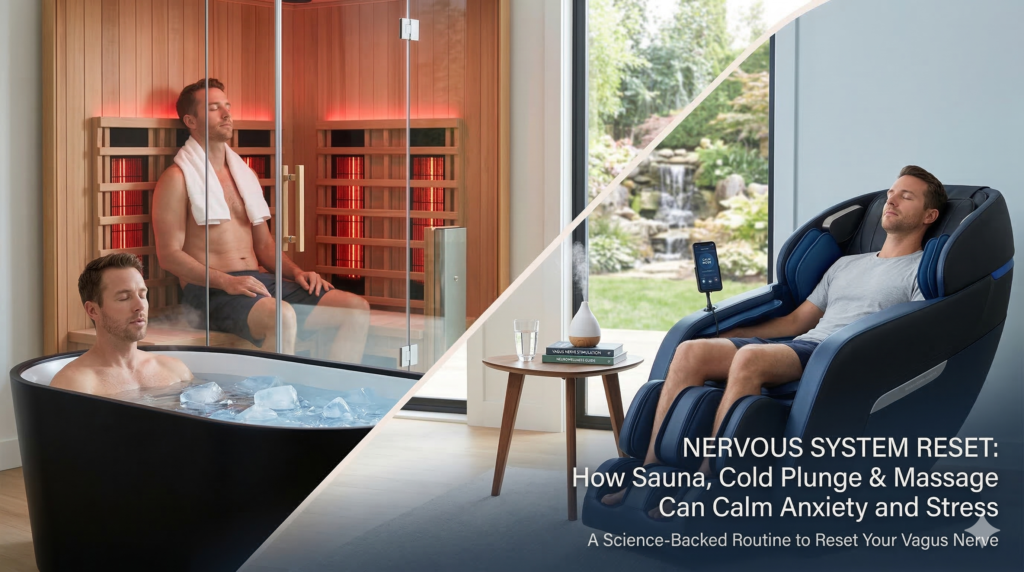
You Can Retrain Your Nervous System — Start Now
Anxiety and chronic stress don’t have to be your norm — they are learned physiological patterns that can be unlearned. Sauna helps you build heat resilience and control cortisol. Cold plunge rewires your dopamine system and activates the vagus nerve at the source. Massage helps to dissolve the physical architecture of stored stress and locks in the parasympathetic state. If you consistently practice these three methods two to three times per week, you can see measurable changes in your HRV, your cortisol rhythm, your sleep quality, and your day-to-day anxiety levels within four to six weeks. You don’t need the perfect setup, a large budget, or unlimited time. You need a protocol, a consistent schedule, and the understanding that your body already has everything it needs to feel calm — it just needs the right inputs to remember how.
Visit www.CollectiveRelaxation.com for all your wellness essentials
Whether you’re creating your first home wellness space or improving an existing routine, Collective Relaxation provides the professional resources, product advice, and community support you need. For more insights, explore this home wellness routine plan.
Common Questions
How Quickly Can Sauna Therapy Alleviate Anxiety Symptoms?
Many people experience a noticeable improvement in their mood and immediate relief from anxiety after just one sauna session, especially in the 30 to 60 minutes following the session when the parasympathetic rebound is at its peak. For long-term, baseline-level reductions in anxiety — such as measurable improvements in HRV, chronic cortisol, and overall stress tolerance — regular use of two to three sessions per week over a period of four to six weeks seems to be the point at which significant neurological adaptation takes place. Individual responses can vary depending on initial stress levels, the length of the session, and whether the sauna is being used in conjunction with a cold plunge and massage.
Can People With High Anxiety or Panic Disorders Safely Do Cold Plunges?
Yes, cold plunges are generally safe for those with anxiety disorders. However, the initial shock of the cold can feel like the start of a panic attack — increased heart rate, difficulty breathing, and a strong desire to get out. For those with panic disorder in particular, it’s highly recommended to start with shorter, less intense cold exposures. For example, end a warm shower with 30 to 60 seconds of cold water before moving on to full immersion. Always check with a doctor before starting cold water immersion therapy if you have a cardiovascular condition, Raynaud’s disease, or a history of cold-induced urticaria. The way you breathe is extremely important — slow, controlled exhales are what turn the cold shock response into a vagal activation experience instead of a panic trigger.
Is Massage Alone Enough to Reset the Nervous System Without Sauna or Cold Plunge?
Absolutely — massage alone has been proven to provide real, measurable benefits to the nervous system. The reductions in cortisol, increases in serotonin and dopamine, and elevation in oxytocin that have been documented in massage research occur independently of any other modality. For those who do not have access to a sauna or cold plunge, regular massage therapy — once or twice a week — is a clinically supported standalone treatment for managing anxiety.
However, massage alone takes longer and does not penetrate as deeply as the full three-step protocol. This is due to physiology: without the preceding heat and cold cycles, the body’s muscle tissues and fascia are not ready to release, and the nervous system has not experienced the contrast therapy fluctuation that makes the body so responsive to therapeutic touch after a cold plunge. Consider the sauna and cold plunge as soil preparation, and massage as seed planting — both stages contribute to the result.
What is the Optimal Temperature for a Cold Plunge to Activate the Vagus Nerve?
Studies and clinical experiences suggest that water temperatures between 50°F and 59°F (10°C to 15°C) are most effective for stimulating the vagus nerve and prompting the corresponding release of dopamine and norepinephrine. Below 50°F, the cold shock response becomes more severe and the risk of cold water shock increases without a corresponding increase in anxiety relief. Above 60°F, the thermal stimulus may not be strong enough to activate the full dive reflex and the cascade of vagal responses. For those new to cold plunges, it may be best to start at the higher end of the temperature range — around 58°F to 60°F — and gradually lower the temperature over several weeks. This allows the nervous system to adjust without making the experience so unpleasant that the practice is abandoned. For more detailed guidance, you can refer to this cold plunge temperature guide.
How Often Should You Complete a Full Nervous System Reset Circuit?
For most individuals seeking to reduce anxiety and build nervous system resilience, the research-backed recommendation is to do a full circuit two to three times a week. This frequency offers enough repeated stimulus to encourage neurological adaptation, which improves HRV, reduces baseline cortisol, and strengthens vagal tone, while also allowing for sufficient recovery time between sessions.
For managing anxiety, you don’t need to do the full protocol every day. In fact, it might be counterproductive. Your nervous system makes its adjustments during the recovery period between sessions, not during the sessions themselves. If you do sessions too often, you might not let the recovery period finish, especially for cold plunge. The process of normalizing dopamine and norepinephrine levels after a cold plunge benefits from having 24 to 48 hours between exposures.
On days when it’s not possible to complete the full 60-to-75-minute routine, a shorter version can be just as effective. This includes 10 minutes in the sauna, a two-minute cold shower, and a 15-minute self-massage using a percussion device. This still provides the essential neurological stimulus and helps to maintain the habit. Consistently completing shorter sessions is more beneficial in the long term than sporadically completing the full routine.
Begin with two sessions in the first week. If you feel fully recovered between sessions, add a third session in the second week. Keep up this routine for six weeks, then assess whether increasing the frequency provides any additional benefits for your particular anxiety pattern. This method works — the key to success is how consistently you stick to it.


Leave a Reply