
 A well-timed sauna session can significantly reduce the time it takes to fall asleep by triggering your body’s natural cooling and melatonin response.
- Research shows that 83.5% of sauna users report improved sleep quality following regular sauna use.
- The key is timing — using a sauna 60–90 minutes before bed aligns with your body’s circadian temperature drop for maximum sleep benefit.
- Infrared and traditional saunas both support better sleep, but they work slightly differently — and choosing the right one matters for your nighttime routine.
- Keep reading to discover the exact step-by-step sauna sleep protocol that sleep specialists and heat therapy researchers recommend.
Most people searching for better sleep are looking in the wrong places — and the answer might be as simple as sitting in a hot room for 20 minutes before bed.
There is a growing body of scientific research that links sauna use with deep, restful sleep. For those seeking a natural, drug-free way to improve the quality of their sleep, heat therapy is emerging as one of the most persuasive choices. Natural wellness resources have started to highlight sauna therapy as a potent, research-supported tool for those who have difficulty achieving regular, high-quality sleep.
Warm Up Before Bedtime for Better Sleep
You already have a natural sleep system in your body that only needs a little nudge to work better. The nudge can be a sauna session in the evening, which will enhance the physiological process that your body undergoes every night before sleep. This will help you fall asleep more quickly, spend more time in the deep sleep stages, and wake up feeling truly refreshed.
Saunas are often seen as a way to relieve aching muscles or as a pampering spa treatment. However, when you grasp what happens inside your body during and after a sauna session, you quickly realize that saunas are one of the most overlooked sleep aids out there. Best of all, they don’t require any supplements, prescriptions, or complex regimens.
How Body Temperature Influences When You Sleep
Sleep isn’t merely a matter of fatigue. One of the main signals your brain uses to determine when to start sleep is your internal body temperature. This is part of your circadian rhythm, the approximately 24-hour internal clock that regulates everything from hormone secretion to alertness levels throughout the day.
The Melatonin Trigger: A Slight 1-2 Degree Drop
As evening approaches, your body’s core temperature will naturally decrease by roughly 1-2 degrees Fahrenheit. This minor shift is one of the main cues your brain uses to start the production of melatonin, the hormone that makes you feel drowsy. When this drop in temperature is sudden and well-timed, you fall asleep more quickly and your sleep quality greatly enhances.
Why Sleeping in a Hot Room is Terrible but a Sauna Helps You Sleep
This is where most people get confused. If heat helps sleep, why does sleeping in a hot room feel so awful? The difference is in what happens after the heat exposure. A hot room keeps your body temperature elevated all night, which suppresses melatonin and disrupts sleep architecture. A sauna, however, temporarily raises your body temperature — and then when you step out, your body begins actively cooling down, causing a faster and more dramatic cooling effect than your body would produce on its own.
The quick drop in temperature after the sauna, not the heat itself, is what really boosts your sleep. Your body overcompensates and drops below its normal temperature before sleep, sending a strong “sleep now” signal to the brain.
Why Cooling Down After a Sauna Is Like Your Body’s Sleep Signal
After leaving a sauna, your blood vessels stay dilated from the heat to get rid of excess warmth. This causes heat to leave your skin quickly and your core temperature to drop faster than it would during a regular evening routine. This process is similar to and enhances the natural drop in temperature before sleep that your circadian rhythm is already trying to create. The outcome is a stronger melatonin signal, less time it takes to fall asleep, and an easier transition into deeper sleep stages.
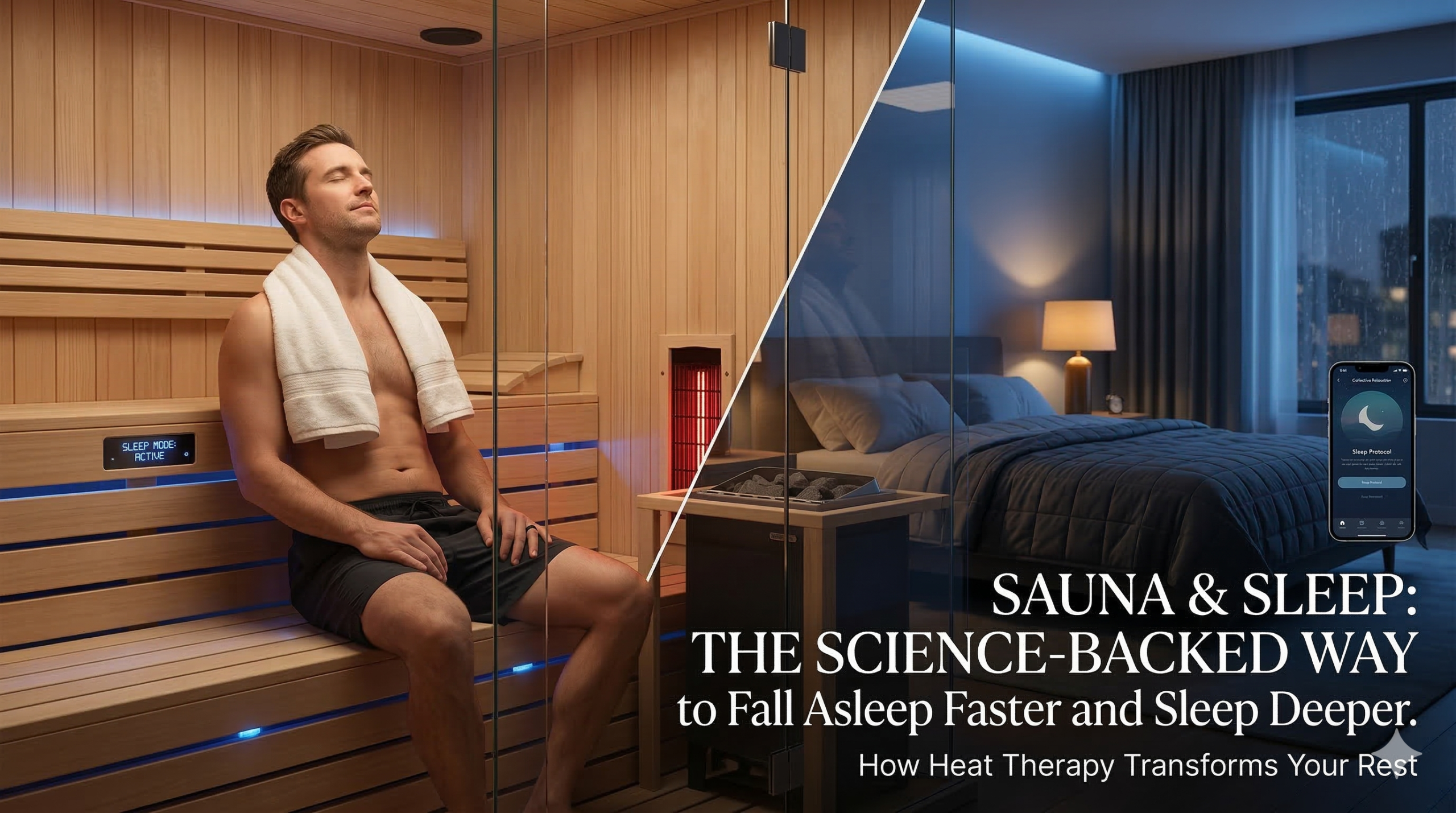
What Does Your Body Go Through in a Sauna?
Knowing what goes on inside your body during a sauna session can help you understand why it consistently improves your sleep. It’s not just about sweating. As soon as you enter the hot room, your body starts several physiological responses that are all connected.
Just like when you do a light cardio workout, your heart rate increases, improving circulation and oxygen delivery throughout your body. Your blood vessels get wider, your skin temperature goes up, and your sweat glands start working to cool you down. All the while, your nervous system starts to shift its activity in a way that’s directly good for sleep.
Let’s take a look at the main physiological changes that occur during a sauna session:
- Internal heat increase: Your body’s temperature increases, which later triggers the cooling response that induces sleep.
- Widening of blood vessels: Blood vessels expand, enhancing circulation and facilitating the release of heat through the skin.
- Activation of sweat glands: Your body’s natural cooling system kicks in, simultaneously eliminating metabolic waste and heat.
- Increase in heart rate: There is moderate cardiovascular stimulation, similar to light exercise.
- Change in the nervous system: The body starts transitioning toward parasympathetic (rest-and-digest) dominance.
- Reduction of stress hormones: Cortisol and other stress-related hormones start to decrease after exposure to heat.
Rise in Core Temperature and Dilation of Blood Vessels
As soon as you step into a sauna — be it traditional or infrared — your body starts absorbing heat energy. Your hypothalamus, which serves as the body’s internal thermostat, senses the increase in core temperature and immediately triggers a cooling response. Blood is rerouted to the surface of the skin, vessels expand, and sweat production starts. This is the process that, after you exit the sauna, generates the strong cooling effect that makes sauna therapy so beneficial for sleep.
Stimulating the Parasympathetic Nervous System
One of the most significant, yet often overlooked, benefits of using a sauna for sleep is its impact on the autonomic nervous system. Research has shown that frequent exposure to heat can stimulate the parasympathetic nervous system, which is the part of the nervous system that controls rest, digestion, and recovery. This is contrary to the “fight or flight” sympathetic state that stress, screens, and stimulants can put you in during the day.
When your parasympathetic nervous system is in control, your heart rate decreases, your muscles become relaxed, your breathing deepens, and your body shifts into a state that is biologically primed for sleep. A sauna session essentially forces that transition — making it one of the most effective ways to wind down after a high-stress day.
Lowering Cortisol Levels and Clearing Stress Hormones
Cortisol, also known as the stress hormone, is one of the main factors that affect the quality of your sleep. When your cortisol levels are high in the evening, you stay mentally awake, which can delay the production of melatonin and prevent you from reaching the deeper, more restorative stages of sleep. Studies have shown that heat therapy can help lower cortisol levels after a session, which can help get rid of the biochemical remnants of a stressful day and create a cleaner hormonal environment that allows for natural sleep.

What Does Science Say About Sauna and Sleep Quality?
It’s not just an old wives’ tale that sauna use can help with sleep. There’s a significant amount of research — from big surveys to controlled clinical studies on passive body heating — that shows the same thing over and over: using heat on purpose before bed makes you fall asleep faster, stay asleep longer, and sleep more deeply.
Survey Reveals 83.5% of Regular Sauna Users Sleep Better
A study of over 500 consistent sauna-goers showed that a whopping 83.5% experienced better sleep after using the sauna. This is not a minor effect, but a nearly unanimous response from those who regularly use saunas. Participants reported falling asleep faster, waking up less often throughout the night, and feeling more rejuvenated in the morning. Even though the data is self-reported, the consistency of this result across a large sample size is hard to ignore.
Using Evening Heat Therapy to Fall Asleep Faster
Studies on passive body heating — which includes taking a warm bath, showering with hot water, and having sauna sessions — have shown that exposure to heat one to two hours before going to bed is linked with significantly shorter sleep latency. Sleep latency is the scientific term for the time it takes you to fall asleep once you get into bed. For those who spend 30 to 60 minutes every night lying awake and staring at the ceiling, this is one of the most significant improvements a natural remedy can provide.
We know how it works. The heat increases your body temperature artificially, and the following cool down speeds up the natural pre-sleep temperature drop that your circadian rhythm is already trying to create. The outcome is a quicker, more powerful sleep-onset signal — reducing that annoying time between getting into bed and actually falling asleep.
First Two Hours of the Night are for Deep Sleep
On top of helping you fall asleep quicker, sauna therapy could also enhance the quality of your sleep, not just how fast you fall asleep. Clinical reviews of heat therapy research indicate that evening sauna sessions might boost deep sleep during the first two hours of the night for some people. Deep sleep, also known as slow-wave sleep, is the most physically rejuvenating stage of the sleep cycle. This is when your body fixes tissue, consolidates memory, regulates hormones, and rejuvenates the immune system.
Heat therapy and deep sleep enhancement are connected because they both involve temperature. After a sauna session, your body cools down, and this lower body temperature is more conducive to slow-wave sleep. Instead of taking several hours to wind down, your body is ready for deep sleep much sooner after you get into bed.
It’s important to remember that results can differ from person to person. Things like the type of sauna used, how long the session lasts, when it’s done, how hydrated the person is, and their individual physiology can all impact the results. But what’s clear across multiple studies is that using heat therapy before bed can help a significant number of people fall asleep faster, sleep more deeply, and sleep more efficiently.
Infrared versus Traditional Sauna: Which is Better for Sleep
Both infrared and traditional saunas can enhance sleep, but they operate differently and offer distinct experiences. A conventional Finnish-style sauna uses heated stones and high ambient air temperatures, usually between 150°F and 195°F, to rapidly and intensely increase your body temperature. An infrared sauna uses light wavelengths that directly penetrate the skin, functioning at lower ambient temperatures of around 120°F to 140°F while still generating significant internal heat. For sleep purposes, infrared saunas are often the preferred choice for evening use because the lower ambient temperature feels less harsh, the session tends to be more calming than invigorating, and the softer heat profile may make it easier to unwind rather than feeling overheated and alert afterward. Traditional saunas are just as effective at activating the temperature-based sleep mechanism, but some users find the higher heat too stimulating close to bedtime. Either type can be effective — the best one is simply the one you’ll consistently use at the right time.
How to Get the Most Out of Your Sauna Sessions for Sleep
It’s one thing to know that saunas can help improve sleep. It’s another to know how to use them properly to get the most out of your sessions. The timing, duration, and post-session environment all play a role. When done right, a sauna session can be the most effective part of your entire sleep routine.
Here’s the method, broken down into four easy steps:
Step 1: Begin Hydrating Before You Start to Sweat
Dehydration is a leading cause of restlessness or waking up in the middle of the night — and a sauna can speed up fluid loss significantly through sweat. Before your session, drink at least 16 oz of water in the 30–60 minutes before. Avoid alcohol entirely before a sauna sleep session, as it disrupts sleep architecture regardless of how relaxed it makes you feel initially. Proper pre-hydration ensures your cardiovascular system handles the heat efficiently and that post-sauna cooldown isn’t accompanied by the restlessness that mild dehydration causes.
Step 2: Schedule Your Sauna Session 60–90 Minutes Prior to Bedtime
Timing is the most important aspect of this whole process. If you get in the sauna too close to when you want to go to bed, there won’t be enough time for your core temperature to fully cool down before you try to sleep. You should aim to end your sauna session 60–90 minutes before you want to go to bed. The sauna session should last 15–25 minutes for most people, but if you’re new to this, you should start with 10 minutes and slowly work your way up as you get used to the heat. This gives your body enough time to start and maintain the cooling down process after being heated, which causes the drop in temperature that makes you feel sleepy.
Step 3: Deliberately Chill Out After Your Sauna Session
Don’t immediately dive back into your usual evening routine as soon as you leave the sauna. The relaxation phase is where the sleep magic really kicks in, and how you handle it is important. Move to a cool (not freezing cold) room, let your body air dry if you can, and avoid immediately plunging into hot water or warming yourself up with hot clothes. A lukewarm or slightly cool shower is fine and can even speed up the cooling down process. The aim is to let your blood vessels carry on their heat-release job without interruption.
Steer clear of screens, glaring overhead lights, or high-energy discussions during this cooldown period. Your nervous system is highly responsive to the parasympathetic state at this time — the last thing you want to do is reactivate your sympathetic nervous system with stimulating content or stress-causing activities. In today’s fast-paced world, getting quality sleep has become one of the most valuable forms of self-care, as discussed in this article.
Step 4: Match Your Cooldown With a Dark, Cool Sleep Environment
Your bedroom setting should complement what your body is already doing. Maintain your room temperature between 60–67°F, which research consistently shows as the ideal temperature range for human sleep. Use blackout curtains or a sleep mask to reduce light exposure, which suppresses melatonin. Minimize noise, or use white noise if your environment is hard to control. When you match a well-timed sauna session with a properly optimized sleep setting, you’re stacking multiple sleep-promoting signals at the same time — creating conditions where high-quality, deep sleep becomes almost certain.
Who Stands to Gain the Most from Sauna-Induced Sleep
Sauna therapy for sleep isn’t a specialized solution for top-tier athletes or biohackers. The people who react most intensely to sauna-induced sleep are often the same people who have tried it all — superior pillows, sleep supplements, white noise machines, strict bedtimes — and still can’t regularly achieve a full night of deep, rejuvenating sleep.
Individuals With Persistent Stress or Elevated Cortisol
If you find yourself unable to stop thinking as soon as you lay down to rest, high cortisol levels are probably to blame. Persistent stress keeps your sympathetic nervous system almost always activated, which directly inhibits the production of melatonin and the decrease in body temperature that your brain requires to begin sleep. A sauna session serves as a mandatory reset – physically forcing your nervous system to switch from its state of stress to the parasympathetic recovery mode where sleep can once again become physiologically possible.
If you’re struggling with work stress, anxiety, or the kind of low-level chronic tension that builds up over weeks and months, the sauna’s ability to clear cortisol can be life-changing. The heat exposure doesn’t just cover up the problem — it tackles the real biochemical barrier that’s preventing you from sleeping.
People Who Can’t Sleep Despite Good Bedtime Habits
There are some people who do everything right — no screens before bed, consistent bedtime, cool dark room — and still lie awake for 45 minutes before falling asleep. For these individuals, the problem is often not enough thermoregulatory signaling. Their body temperature isn’t falling sharply enough at night to trigger a strong melatonin response, even when everything else is perfect. A sauna session gives that system the boost it needs.
For those who are already practicing good sleep hygiene, incorporating a 15–20 minute sauna session can be the missing link between “doing everything right” and actually falling asleep quickly. Many people who are conscious of their sleep don’t realize that this is the physiological lever they’re missing.
Start Sleeping Better Tonight
Improved sleep doesn’t require a complex regimen of supplements, a high-priced sleep monitor, or a total lifestyle change. The research consistently points to a surprisingly simple solution: use heat strategically, allow your body to cool down, and then let your body’s physiology do what it’s meant to do.
The sauna sleep method is effective because it works with your body’s natural biology instead of against it. You’re not forcing sleep with sedatives or fooling your brain with melatonin supplements. You’re enhancing a natural signal your body is already trying to send — the core temperature drop that signals your brain it’s time to transition into deep, restorative sleep.
No matter if you use a sauna at the gym, an infrared sauna at home, or even a very hot bath, the rules are the same. Time it right, hydrate adequately, cool down on purpose, and safeguard the sleep environment you enter afterward.
- When to Sauna: Finish your sauna 60–90 minutes before bed — not right before
- How Long to Sauna: 15–25 minutes for most people; beginners start at 10 minutes
- Drink: Drink at least 16 oz of water before your session
- After Sauna: Allow natural heat dissipation; avoid immediately reheating
- Sleeping Conditions: Target 60–67°F, blackout darkness, and minimal noise
- Regular Use: Benefits compound over time — a regular evening routine produces stronger results than occasional sessions
Common Questions
If you’re new to using a sauna for sleep, you probably have questions about safety, timing, frequency, and what to realistically expect. The answers below are grounded in what the research and clinical application of heat therapy actually show — not what wellness marketing tends to overstate.
Before we delve into the specifics, let’s quickly recap the most frequently asked questions about saunas and sleep:
Question
Short Answer
How long should a session be?
15–25 minutes; beginners start at 10
Is nightly use safe?
Yes, for most healthy adults with proper hydration
Does a cold shower after help?
Yes — it can accelerate the cooldown and deepen the sleep signal
Does it help with insomnia?
Yes, particularly sleep-onset insomnia and stress-related disruption
How soon will I see results?
Many people notice improvement within the first 1–3 sessions
Keep in mind that individual responses vary based on health status, sauna type, hydration, and consistency. If you have cardiovascular conditions, are pregnant, or take medications that affect blood pressure or thermoregulation, consult a healthcare provider before starting a regular sauna routine.
That being said, for most healthy adults, the risk of using a sauna in the evening is low — and the potential for improved sleep is high.
What is the Ideal Duration for a Sauna Session to Improve Sleep?
If you’re using a sauna to help you sleep, aim for a session that lasts between 15 and 25 minutes. This is the perfect amount of time to raise your core temperature enough to promote vasodilation and a shift in your nervous system — both of which can help you sleep better. Plus, it’s short enough to prevent you from becoming too tired, dehydrated, or overstimulated.
For those who are just starting to use a sauna, begin with 10 minutes and gradually increase the duration over one or two weeks. The aim is not to endure discomfort, but to achieve a level of heat that is comfortable and from which your body can recover efficiently. Longer sessions do not necessarily lead to better sleep, and sessions longer than 30 minutes near bedtime can sometimes have the opposite effect, making some people feel more awake rather than relaxed.
Can I Use a Sauna Every Night Before Bed?
If you’re a healthy adult, it’s generally safe to use a sauna every night before bed, as long as you stay hydrated and don’t overdo it. Many people — especially in Finland, where daily sauna use is the norm — use saunas every evening without any problems. The most important things to keep in mind are to drink plenty of water, not to stay in the sauna too long, and to pay attention to how your body reacts.
Should you start to feel the effects of dehydration (headache, dizziness, or extreme tiredness), cut down on the amount of time you spend in the sauna or the number of sessions you have, and drink more water. If you have a heart condition, low blood pressure, or any other heart-related issues, you should get the all-clear from your doctor before you start to use the sauna on a regular basis.
Does a Cool Shower After a Sauna Session Help You Sleep Better?
Having a cool or lukewarm shower after a sauna session can help speed up the process of cooling down, which can promote better sleep. By helping your body get rid of the heat more quickly, a shower after a sauna session can help your core temperature drop faster. And as we’ve already discussed, a lower core temperature can help you fall asleep faster and have better quality sleep.
The operative word here is cool, not freezing. A bracing cold plunge right after a sauna is energizing and invigorating for a lot of people — which is the last thing you want 60–90 minutes before you go to bed. A quick, comfortably cool shower is just right:
- Speeds up skin cooling without jarring the nervous system
- Washes off sweat, which can lead to discomfort and itchiness while sleeping
- Assists in reducing heart rate back to a resting baseline
- Aids the shift into dominance of the parasympathetic nervous system
Consider it a gentle boost to your body’s cooldown procedure — not a contrast therapy session. Reserve the intense cold plunges for morning routines where the energizing effect is actually beneficial.
Can a Sauna Help With Insomnia or Just Light Sleep Trouble?
Sauna therapy shows the most consistent results with sleep-onset insomnia — the type where you struggle to fall asleep despite feeling tired — and with sleep disruption that’s driven by stress, elevated cortisol, or poor thermoregulation. For people with chronic clinical insomnia rooted in anxiety disorders, sleep apnea, or other underlying medical conditions, sauna use can be a helpful complementary tool but should not replace evidence-based treatments like Cognitive Behavioral Therapy for Insomnia (CBT-I) or medical evaluation.
When Will I Start Seeing Improvements in My Sleep After I Begin Sauna Sessions?
A significant number of individuals report experiencing a noticeable improvement in their sleep after their first to third sessions. This is especially true in terms of how fast they fall asleep and the level of relaxation they feel as they prepare for bed. The immediate reduction in cortisol levels and change in the nervous system that a sauna session brings about often make the effects noticeable on the first night, even without any long-term adaptation.
However, the benefits of deeper sleep quality, especially increases in slow-wave deep sleep, tend to build up with regular use over one to two weeks. Your body becomes more proficient at performing the post-heat cooling response, your sleep environment becomes linked with the relaxation ritual, and the cumulative decrease in chronic stress hormones begins to create a noticeably different baseline for sleep quality.
What this means for you: you’ll likely notice a change right away, but give it at least two weeks of regular use before you decide if this method is effective for you.
Remember To Visit CollectiveRelaxation.com to get all YOur Sauna Needs







Leave a Reply